5% Off Sitewide | Use code KMUS5 on checkout
- Choose your Country

5% Off Sitewide | Use code KMUS5 on checkout
Katsushika Hokusai
Katsushika Hokusai (葛飾 北斎), born around October 31, 1760, stands as a towering figure in the world of art. Known simply as Hokusai, this Japanese ukiyo-e artist from the Edo period revolutionized the realm of printmaking and painting. His most renowned work, the woodblock print series Thirty-Six Views of Mount Fuji, features the iconic The Great Wave off Kanagawa, and marks a transformative chapter in the history of art. Hokusai’s profound impact extends beyond Japan, influencing European artists such as Vincent van Gogh and Claude Monet during the Japonisme movement of the late 19th century.
Early Life and Artistic BeginningsHokusai’s origins are shrouded in a bit of mystery, but historical records suggest he was born to an artisan family in the Katsushika district of Edo, now modern-day Tokyo. His birth date is commonly cited as the 23rd day of the 9th month of the 10th year of the Hōreki era, which corresponds to October 31, 1760. As a child, he was named Tokitarō and grew up in an environment rich in artistic potential. His father, Nakajima Ise, was a mirror-maker for the shōgun, though it’s possible his mother was a concubine since his father did not make him an heir.From a young age, Hokusai exhibited a passion for art, reportedly beginning to paint around the age of six. He may have learned the basics from his father, who decorated mirrors, nurturing the budding artist’s skills. At 12, Hokusai began working in a bookshop and lending library, a popular venue for woodblock-printed books. By 14, he was apprenticed to a woodcarver, and at 18, he entered the studio of Katsukawa Shunshō, a prominent ukiyo-e artist known for his portraits of courtesans and kabuki actors.
The Rise of Hokusai: Innovations and Name ChangesHokusai’s early career was marked by a series of name changes, a common practice among Japanese artists of the time. Each new name represented a shift in his artistic style and personal growth. Under the name Shunrō, he published his first prints in 1779, depicting kabuki actors. His first marriage ended in the early 1790s, followed by a second, both of which were brief. Despite personal losses, Hokusai fathered two sons and three daughters, including his youngest daughter Ei (also known as Ōi), who would later assist him in his artistic endeavors.After the death of Shunshō in 1793, Hokusai ventured into new artistic territories, exploring European styles through French and Dutch copper engravings. This period saw him expelled from the Katsukawa school by Shunkō, Shunshō’s chief disciple, possibly due to his interest in the rival Kanō school. Hokusai viewed this expulsion as a catalyst for his creative evolution, motivating him to explore new artistic horizons.
A New Artistic Direction: Landscapes and Daily LifeHokusai’s departure from the Katsukawa school marked a significant shift in his work. He moved away from the traditional subjects of courtesans and actors to focus on landscapes and scenes from everyday life. This evolution was revolutionary in ukiyo-e, paving the way for future generations of artists. During this time, Hokusai associated with the Tawaraya School, adopting the name “Tawaraya Sōri.” He created many commissioned prints and illustrations for humorous poetry books (kyōka ehon) and began to make a name for himself as an independent artist under the name Hokusai Tomisa.
The Pinnacle of Fame: Masterpieces and InfluenceBy 1800, Hokusai had fully embraced the name Katsushika Hokusai, which combined his birthplace with “north studio,” a reference to the North Star and a nod to his Nichiren Buddhist faith. He began publishing collections of landscapes, such as Famous Sights of the Eastern Capital and Eight Views of Edo, and attracted a steady stream of students. His fame grew rapidly, fueled not only by his art but also by his flair for self-promotion. An example of his boldness was his creation of a massive portrait of the Buddhist prelate Daruma during an Edo festival in 1804, using a broom and buckets of ink.During this period, Hokusai collaborated with novelist Takizawa Bakin on illustrated books, including the highly popular Chinsetsu Yumiharizuki (Strange Tales of the Crescent Moon). His imaginative illustrations gained him considerable acclaim, although the collaboration eventually ended. Hokusai also created several albums of erotic art (shunga), with his most famous piece being The Dream of the Fisherman’s Wife, which depicts a provocative encounter between a woman and a pair of octopuses.
Artistic Innovations and Later YearsIn 1811, Hokusai adopted the name Taito and began a new phase of his career, focusing on art manuals and his famous Hokusai Manga. These manuals, including Quick Lessons in Simplified Drawing, aimed to attract students and generate income. The first volume of Manga, published in 1814, was an immediate success, and over time, Hokusai produced a total of fifteen volumes filled with thousands of drawings depicting various subjects with a humorous touch.A major highlight of Hokusai’s later years was the creation of The Great Daruma, an enormous portrait painted in Nagoya in 1817. This monumental work, measuring 18 × 10.8 meters, drew enormous crowds and earned him the nickname “Daruma Master.” Although the original was destroyed in 1945, promotional handbills from the event are preserved.
The Legacy of Mount Fuji and Final YearsIn the early 1830s, Hokusai produced his most celebrated work, Thirty-Six Views of Mount Fuji. This series includes the famed The Great Wave off Kanagawa and Red Fuji, and represents the culmination of Hokusai’s mastery of perspective and composition. His use of Western-style perspective to depict depth and volume in The Great Wave was revolutionary and helped solidify his reputation both in Japan and abroad.The 1830s also saw Hokusai working under the name “Gakyō Rōjin” (The Old Man Mad About Art), during which he created One Hundred Views of Mount Fuji. This series is considered a masterpiece among his landscape prints. Hokusai’s final years were marked by personal and professional challenges, including a devastating fire in 1839 that destroyed much of his work. Despite these setbacks, Hokusai continued to create art, producing notable works like The Dragon of Smoke Escaping from Mt Fuji and Tiger in the Snow.
Death and Enduring InfluenceHokusai’s relentless pursuit of artistic perfection was evident even at the end of his life. On his deathbed, he lamented the shortness of time, wishing for just a few more years to fully realize his artistic vision. He passed away on May 10, 1849, at the age of 88, and was buried at Seikyō-ji in Tokyo.Hokusai’s influence extended far beyond his lifetime. His innovative use of perspective and composition, along with his diverse body of work, left a lasting mark on the art world. His prints and illustrations have inspired numerous Western artists, from the Impressionists like Claude Monet and Pierre-Auguste Renoir to Art Nouveau designers. The Japonisme movement, which gained momentum in 19th-century Europe, brought Hokusai’s work to international attention. French printmaker Félix Vallotton, for instance, was deeply inspired by Hokusai’s sketchbooks.The legacy of Hokusai continues to be celebrated today. Exhibitions of his work, such as the 2005 Tokyo National Museum show and the British Museum’s 2017 exhibition, draw significant crowds and highlight his enduring appeal. His influence has also extended into literature and popular culture, inspiring works like Roger Zelazny’s Hugo Award-winning short story 24 Views of Mt. Fuji, by Hokusai and a 2021 biographical film about the artist.Hokusai’s art remains a testament to his boundless creativity and dedication, bridging cultures and inspiring generations with his vision of beauty and innovation. His ability to capture the essence of both the natural world and human experience ensures that his legacy endures as a beacon of artistic brilliance.
Read moreShowing 401–452 of 452 results

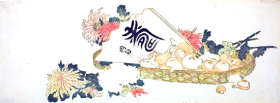
Basket of Peonies
By Katsushika HokusaiSizes starting at $279.00
Bell-Flower and Dragonfly
By Katsushika HokusaiSizes starting at $299.00
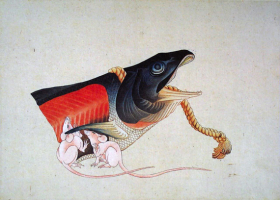
Salmon and Mice
By Katsushika HokusaiSizes starting at $279.00
Making paper cords for tying hair
By Katsushika HokusaiSizes starting at $439.00
Mounting Love at the Snowbound Barrier
By Katsushika HokusaiSizes starting at $439.00
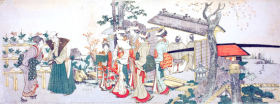
A Group of Young Women Entering the Garden of a Horticulturist
By Katsushika HokusaiSizes starting at $439.00
Admiring wisteria
By Katsushika HokusaiSizes starting at $429.00An Autumn Gift
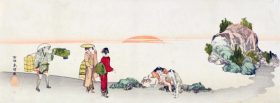
By Katsushika HokusaiSizes starting at $439.00Beach at sunrise
By Katsushika HokusaiSizes starting at $439.00Boating parties on the Sumida River
By Katsushika HokusaiSizes starting at $439.00Boats transporting rice on the Sumida River
By Katsushika HokusaiSizes starting at $439.00Boy releasing a kite
By Katsushika HokusaiSizes starting at $439.00
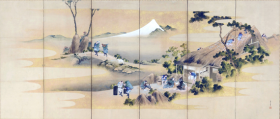
Country Scenes and Mount Fuji
By Katsushika HokusaiSizes starting at $399.00
Courtesans looking at the autumn moon
By Katsushika HokusaiSizes starting at $449.00Dressing Room for Musicians at a Theater
By Katsushika HokusaiSizes starting at $449.00
Ferry boat
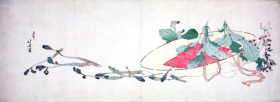
By Katsushika HokusaiSizes starting at $459.00Flowers and spring greens in a hat
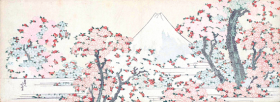
By Katsushika HokusaiSizes starting at $439.00Fuji over Cherry Blossom
By Katsushika HokusaiSizes starting at $449.00Gathering Herbs
By Katsushika HokusaiSizes starting at $439.00Goldfish farm
By Katsushika HokusaiSizes starting at $439.00Goldfish vendor
By Katsushika HokusaiSizes starting at $439.00
Hanging up dyed cloth
By Katsushika HokusaiSizes starting at $469.00
Picnic party
By Katsushika HokusaiSizes starting at $449.00Servant throwing bundles of branches into waterfall
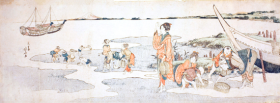
By Katsushika HokusaiSizes starting at $439.00Shellfish gathering
By Katsushika HokusaiSizes starting at $439.00The Bluebell
By Katsushika HokusaiSizes starting at $459.00The Chofu Jewel River
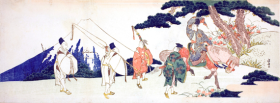
By Katsushika HokusaiSizes starting at $439.00The Eastern Journey of the Celebrated Poet Ariwara no Narihira
By Katsushika HokusaiSizes starting at $439.00The Feather Robe
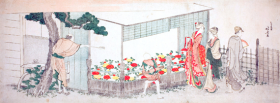
By Katsushika HokusaiSizes starting at $439.00The Peony Show
By Katsushika HokusaiSizes starting at $439.00The Swordsmith Munechika and the God of Inari
By Katsushika HokusaiSizes starting at $439.00Travelers’ tea house
By Katsushika HokusaiSizes starting at $439.00Tsukasa and Courtesans watching the Moon Rise in the Yoshiwara
By Katsushika HokusaiSizes starting at $429.00Viewing votive paintings
By Katsushika HokusaiSizes starting at $439.00
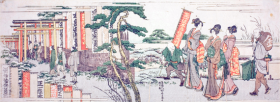
Visiting Oji Inari Shrine
By Katsushika HokusaiSizes starting at $429.00Visitors to Enoshima
By Katsushika HokusaiSizes starting at $439.00Women and Attendents by the Beach of Tanakawa
By Katsushika HokusaiSizes starting at $439.00Women and children out for a picnic
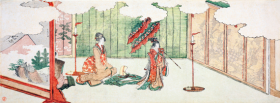
By Katsushika HokusaiSizes starting at $439.00Women on the Veranda Looking at a Girl Picking Flower
By Katsushika HokusaiSizes starting at $429.00Women Visiting the Shrine of Shoichii Taro Inari Daimyo
By Katsushika HokusaiSizes starting at $439.00Young girl dancing at nobleman’s mansion
By Katsushika HokusaiSizes starting at $439.00Surimono with Fans
By Katsushika HokusaiSizes starting at $439.00Large Lobster
By Katsushika HokusaiSizes starting at $439.00
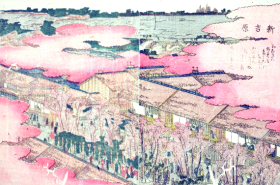
Shin Yoshiwara
By Katsushika HokusaiSizes starting at $299.00
Asakusa Festival
By Katsushika HokusaiSizes starting at $299.00
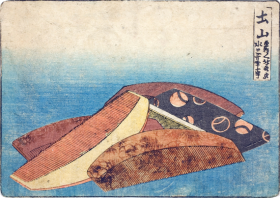
Comb Products in Tsuchiyama
By Katsushika HokusaiSizes starting at $279.00
Craftsman working on Temple
By Katsushika HokusaiSizes starting at $329.00
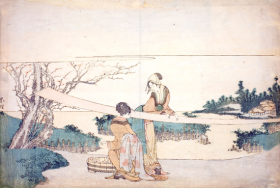
Two women stretching cloth
By Katsushika HokusaiSizes starting at $289.00Women on a Veranda Stretching Cloth to Dry
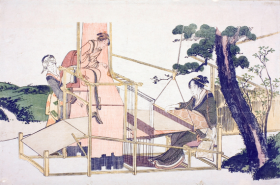
By Katsushika HokusaiSizes starting at $299.00Women weaving on a loom
By Katsushika HokusaiSizes starting at $309.00
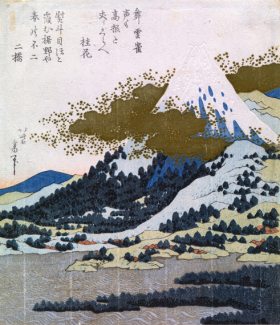
Mount Fuji From Lake Ashi in Hakone
By Katsushika HokusaiSizes starting at $249.00
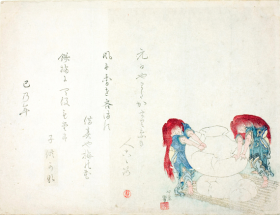
Making mochi
By Katsushika HokusaiSizes starting at $269.00