5 % rabatt använd koden KMSE5 i kassan
- Choose your Country

5 % rabatt använd koden KMSE5 i kassan
Edvard Munch
Edvard Munch (12 December 1863 – 23 January 1944) Norwegian painter and printmaker whose intensely evocative treatment of psychological themes built upon some of the main tenets of late 19th-century Symbolism and greatly influenced German Expressionism in the early 20th century. His painting The Scream, or The Cry (1893), can be seen as a symbol of modern spiritual anguish.
Munch was born into a middle-class family that was plagued with ill health, born in a farmhouse in the village of Ådalsbruk in Løten, Norway, to Laura Catherine Bjølstad and Christian Munch. His mother died when he was five, his eldest sister when he was 14, both of tuberculosis; Munch eventually captured the latter event in his first masterpiece, The Sick Child (1885–86). Munch’s father and brother also died when he was still young, and another sister developed mental illness. “Illness, insanity, and death,” as he said, “were the black angels that kept watch over my cradle and accompanied me all my life.”
Munch showed a flair for drawing at an early age but received little formal training. An important factor in his artistic development was the Kristiania Bohème, a circle of writers and artists in Kristiania, as Oslo was then called. Munch soon outgrew the prevailing naturalist aesthetic in Kristiania, partly as a result of his assimilation of French Impressionism after a trip to Paris in 1889 and his contact from about 1890 with the work of the Post-Impressionist painters Paul Gauguin and Henri de Toulouse-Lautrec. In some of his paintings from this period he adopted the Impressionists’ open brushstrokes, but Paul Gauguin’s use of the bounding line was to prove more congenial to him, as was the Synthetist artists’ ambition to go beyond the depiction of external nature and give form to an inner vision.
During these early years, he experimented with many styles, including Naturalism and Impressionism. Some early works are reminiscent of Manet. Many of these attempts brought him unfavorable criticism from the press and garnered him constant rebukes by his father, who nonetheless provided him with small sums for living expenses. Munch also received his father’s ire for his relationship with Hans Jæger, the local nihilist who lived by the code ”a passion to destroy is also a creative passion” and who advocated suicide as the ultimate way to freedom. Munch came under his malevolent, anti-establishment spell. ”My ideas developed under the influence of the bohemians or rather under Hans Jæger. Many people have mistakenly claimed that my ideas were formed under the influence of Strindberg and the Germans … but that is wrong. They had already been formed by then.”
Munch continued to employ a variety of brushstroke techniques and color palettes throughout the 1880s and early 1890s, as he struggled to define his style. His idiom continued to veer between naturalistic, as seen in Portrait of Hans Jæger and impressionistic, as in Rue Lafayette. His Inger On the Beach (1889), which caused another storm of confusion and controversy, hints at the simplified forms, heavy outlines, sharp contrasts, and emotional content of his mature style to come. He began to carefully calculate his compositions to create tension and emotion. In 1889, Munch presented his first one-man show of nearly all his works to date. The recognition it received led to a two-year state scholarship to study in Paris under French painter Léon Bonnat.
Munch arrived in Paris during the festivities of the Exposition Universelle (1889) and roomed with two fellow Norwegian artists. His picture Morning (1884) was displayed at the Norwegian pavilion. He spent his mornings at Bonnat’s busy studio (which included female models) and afternoons at the exhibition, galleries, and museums (where students were expected to make copies as a way of learning technique and observation). Munch recorded little enthusiasm for Bonnat’s drawing lessons—”It tires and bores me—it’s numbing”
Munch was enthralled by the vast display of modern European art, including the works of three artists who would prove influential: Paul Gauguin, Vincent van Gogh, and Henri de Toulouse-Lautrec—all notable for how they used color to convey emotion. Munch was particularly inspired by Gauguin’s ”reaction against realism” and his credo that ”art was human work and not an imitation of Nature”
In December 1889 his father died, leaving Munch’s family destitute. He returned home and arranged a large loan from a wealthy Norwegian collector when wealthy relatives failed to help, and assumed financial responsibility for his family from then on. Christian’s death depressed him and he was plagued by suicidal thoughts: ”I live with the dead—my mother, my sister, my grandfather, my father…Kill yourself and then it’s over. Why live?”
By 1892, Munch formulated his characteristic, and original, Synthetist aesthetic, as seen in Melancholy (1891), in which color is the symbol-laden element. Considered by the artist and journalist Christian Krohg as the first Symbolist painting by a Norwegian artist, Melancholy was exhibited in 1891 at the Autumn Exhibition in Oslo. During his four years in Berlin, Munch sketched out most of the ideas that would comprise his major work, The Frieze of Life, first designed for book illustration but later expressed in paintings. He sold little, but made some income from charging entrance fees to view his controversial paintings. Already, Munch was showing a reluctance to part with his paintings, which he termed his ”children”.
At the heart of Munch’s achievement is his series of paintings on love and death. Its original nucleus was formed by six pictures exhibited in 1893, and the series had grown to 22 works by the time it was first exhibited under the title Frieze of Life at the Berlin Secession in 1902. Munch constantly rearranged these paintings, and if one had to be sold, he would make another version of it. Thus in many cases there are several painted versions and prints based on the same image.
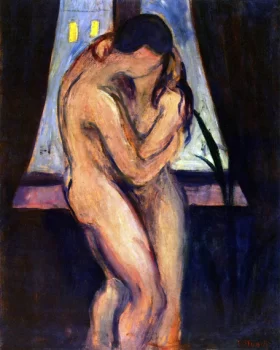
Love’s awakening is shown in The Voice (1893), where on a summer night a girl standing among trees seems to be summoned more by an inner voice than by any sounds from a boat on the sea behind her. Compositionally, this is one of several paintings in the Frieze in which the winding horizontal of the coastline is counterpoised with the verticals of trees, figures, or the pillarlike reflection across the sea of sun or moon. Love’s blossoming is shown in The Kiss (1892), in which a man and woman are locked in a tender and passionate embrace, their bodies merging into a single undulating form and their faces melting so completely into each other that neither retains any individual features. An especially powerful image of the surrender, or transcendence, of individuality is Madonna (1894–95), which shows a naked woman with her head thrown back in ecstasy, her eyes closed, and a red halo-like shape above her flowing black hair. This may be understood as the moment of conception, but there is more than a hint of death in the woman’s beautiful face. In Munch’s art, woman is an “other” with whom union is desperately desired, yet feared because it threatens the destruction of the creative ego.
In other works forming the Frieze, Munch explored the theme of suffering caused by love, as seen in such titles as Melancholy (c. 1892–93), Jealousy (1894–95), and Ashes (1894). If isolation and loneliness, always present in his work, are especially emphasized in these pictures, they are equally apparent in Death in the Sick Room (1893–95), one of his many paintings about death. He made a wooden frame with carved reliefs for the large painting Metabolism (1898), initially called Adam and Eve. This work reveals Munch’s preoccupation with the ”fall of man” and his pessimistic philosophy of love. Motifs such as The Empty Cross and Golgotha (both c.1900) reflect a metaphysical orientation, and also reflect Munch’s pietistic upbringing.
”The Frieze of Life” themes recur throughout Munch’s work but he especially focused on them in the mid-1890s. In sketches, paintings, pastels and prints, he tapped the depths of his feelings to examine his major motifs: the stages of life, the femme fatale, the hopelessness of love, anxiety, infidelity, jealousy, sexual humiliation, and separation in life and death. These themes are expressed in paintings such as The Sick Child (1885), Love and Pain (retitled Vampire; 1893–94), Ashes (1894), and The Bridge.
The same type of dramatic perspective is used in The Scream, which is Munch’s most famous work. Inspired by a hallucinatory experience in which Munch felt and heard a “scream throughout nature,” it depicts a panic-stricken creature, simultaneously corpselike and reminiscent of a sperm or fetus, whose contours are echoed in the swirling lines of the blood-red sky. In this painting anxiety is raised to a cosmic level, ultimately related to the ruminations on death and the void of meaning that were to be central to Existentialism. (The two earliest versions of The Scream date to 1893; Munch created another version in 1895 and completed a fourth likely in 1910.)
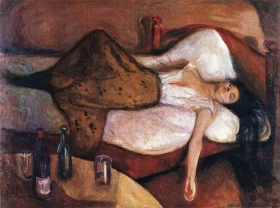
In 1896, Munch moved to Paris, where he focused on graphic representations of his Frieze of Life themes. He further developed his woodcut and lithographic technique. Munch’s Self-Portrait with Skeleton Arm (1895) is done with an etching needle-and-ink method also used by Paul Klee. Munch also produced multi-colored versions of The Sick Child, concerning tuberculosis, which sold well, as well as several nudes and multiple versions of Kiss (1892). In May 1896, Siegfried Bing held an exhibition of Munch’s work inside Bing’s Maison de l’Art Nouveau. The exhibition displayed sixty works, including The Kiss, The Scream, Madonna, The Sick Child, The Death Chamber, and The Day After.
His financial situation improved considerably and in 1897, Munch bought himself a summer house facing the fjords of Kristiania, a small fisherman’s cabin built in the late 18th century, in the small town of Åsgårdstrand in Norway. He dubbed this home the ”Happy House” and returned here almost every summer for the next 20 years. It was this place he missed when he was abroad and when he felt depressed and exhausted. ”To walk in Åsgårdstrand is like walking among my paintings—I get so inspired to paint when I am here”.
Munch suffered a nervous breakdown in 1908–09, and afterward his art became more positive and extroverted without recovering its previous intensity. Among the few exceptions is his haunting Self-Portrait: The Night Wanderer (c. 1930), one of a long series of self-portraits he painted throughout his life.
The outbreak of World War I found Munch with divided loyalties, as he stated, ”All my friends are German but it is France I love.” In the 1930s, his German patrons, many Jewish, lost their fortunes and some their lives during the rise of the Nazi movement. Munch found Norwegian printers to substitute for the Germans who had been printing his graphic work. Given his poor health history, during 1918 Munch felt himself lucky to have survived a bout of the Spanish flu, the worldwide pandemic of that year.
To the end of his life, Munch continued to paint unsparing self-portraits, adding to his self-searching cycle of his life and his unflinching series of takes on his emotional and physical states. In the 1930s and 1940s, the Nazis labeled Munch’s work ”degenerate art” (along with that of Picasso, Klee, Matisse, Gauguin and many other modern artists) and removed his 82 works from German museums. In 1940, the Germans invaded Norway and the Nazi party took over the government. Munch was 76 years old. With nearly an entire collection of his art in the second floor of his house, Munch lived in fear of a Nazi confiscation. Seventy-one of the paintings previously taken by the Nazis had been returned to Norway through purchase by collectors (the other eleven were never recovered), including The Scream and The Sick Child, and they too were hidden from the Nazis.
Munch died in his house at Ekely near Oslo on 23 January 1944, about a month after his 80th birthday.
Munch was a leader in the revolt against the naturalistic dictates of 19th-century academic painting and also went beyond the naturalism still inherent in Impressionism. His concentration on emotional essentials sometimes led to radical simplifications of form and an expressive, rather than descriptive, use of colour. All these tendencies were taken up by a number of younger artists, notably the leading proponents of German Expressionism.
n May 2012, The Scream sold for US$119.9 million (equivalent to $135,200,000 in 2020), and is the second most expensive artwork ever sold at an open auction. (It was surpassed in November 2013 by Three Studies of Lucian Freud, which sold for US$142.4 million). On 14 November 2016 a version of Munch’s The Girls on the Bridge sold for US$54.5 million (equivalent to $58,800,000 in 2020) at Sotheby’s, New York, making it the second highest price achieved for one of his paintings.
Read moreVisar 101–200 av 208 resultat

Summer Night, Asgardstrand
By Edvard MunchSizes starting at kr2.549.00
Tete A Tete
By Edvard MunchSizes starting at kr2.609.00
The Mermaid
By Edvard MunchSizes starting at kr4.879.00
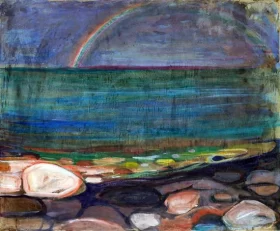
The Rainbow
By Edvard MunchSizes starting at kr2.669.00
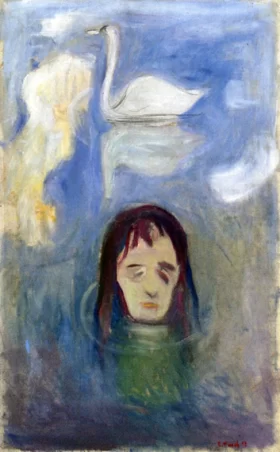
Vision
By Edvard MunchSizes starting at kr3.019.00
Eye In Eye
By Edvard MunchSizes starting at kr2.659.00
Father And Son
By Edvard MunchSizes starting at kr2.659.00
Fertility
By Edvard MunchSizes starting at kr2.639.00
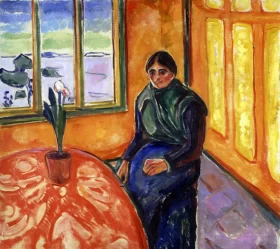
Melancholy, Laura
By Edvard MunchSizes starting at kr2.579.00
Woman In An Interior
By Edvard MunchSizes starting at kr2.659.00
Man And Woman
By Edvard MunchSizes starting at kr3.039.00
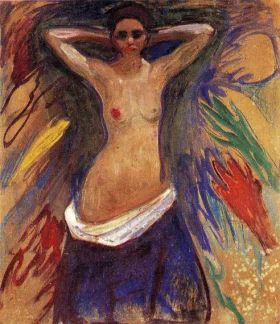
The Hands
By Edvard MunchSizes starting at kr2.579.00
Half Nude In A Blue Skirt
By Edvard MunchSizes starting at kr2.899.00
The Day After
By Edvard MunchSizes starting at kr2.819.00The Kiss
By Edvard MunchSizes starting at kr2.659.00
Death And Life
By Edvard MunchSizes starting at kr2.929.00
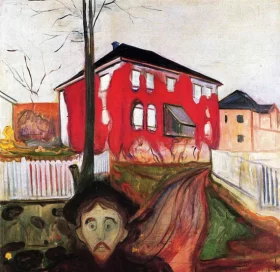
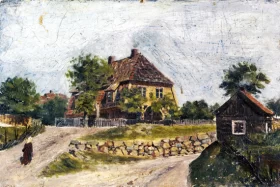
House With Red Virginia Creeper
By Edvard MunchSizes starting at kr2.599.00
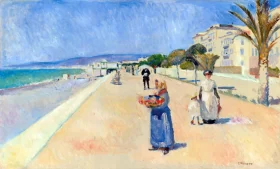
Morning On The Promenade Des Anglais
By Edvard MunchSizes starting at kr3.069.00
Woman, Sphinx
By Edvard MunchSizes starting at kr2.809.00
Moonlight, 1893
By Edvard MunchSizes starting at kr2.459.00
Red Virginia Creeper
By Edvard MunchSizes starting at kr2.489.00
The Storm
By Edvard MunchSizes starting at kr2.869.00
House In Moonlight
By Edvard MunchSizes starting at kr2.749.00
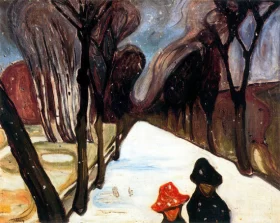
Snow Falling In The Lane
By Edvard MunchSizes starting at kr2.659.00
Cypress In Moonlight
By Edvard MunchSizes starting at kr2.929.00
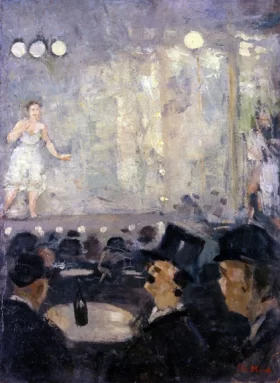
Cabaret
By Edvard MunchSizes starting at kr2.779.00
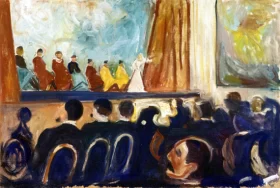
Cabaret
By Edvard MunchSizes starting at kr2.969.00
Night In Nice
By Edvard MunchSizes starting at kr2.549.00
Summer Night
By Edvard MunchSizes starting at kr2.719.00
Street In Asgardstrand
By Edvard MunchSizes starting at kr2.779.00
Summer Night In Studenterlunden
By Edvard MunchSizes starting at kr2.519.00
The Island
By Edvard MunchSizes starting at kr2.519.00
House In Borre
By Edvard MunchSizes starting at kr2.699.00
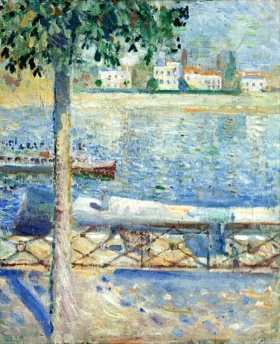
The Seine At Saint Cloud
By Edvard MunchSizes starting at kr2.629.00
Seinen Ved Saint-Cloud -1890
By Edvard MunchSizes starting at kr2.719.00
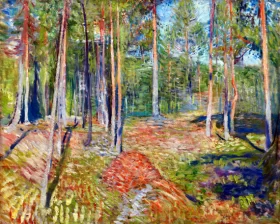
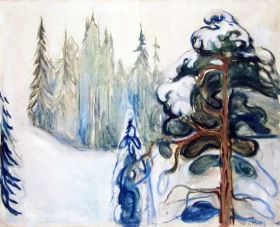
Pine Forest
By Edvard MunchSizes starting at kr2.659.00
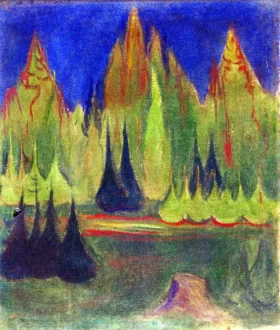
Dark Spruce Forest
By Edvard MunchSizes starting at kr2.899.00
Dark Spruce Forest
By Edvard MunchSizes starting at kr2.929.00
Dark Spruce Forest
By Edvard MunchSizes starting at kr2.579.00
Dark Spruce Forest
By Edvard MunchSizes starting at kr2.579.00
Forest On The Way To Borre
By Edvard MunchSizes starting at kr2.399.00
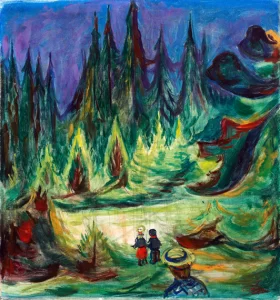
Der MäRchenwald
By Edvard MunchSizes starting at kr2.459.00
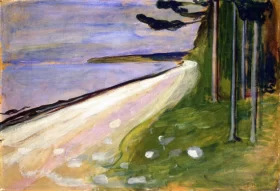
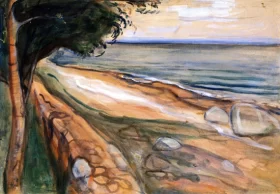
Beach In Asgartstrand
By Edvard MunchSizes starting at kr2.939.00Beach
By Edvard MunchSizes starting at kr2.869.00
Beach
By Edvard MunchSizes starting at kr4.329.00New Snow
By Edvard MunchSizes starting at kr2.549.00
Winter
By Edvard MunchSizes starting at kr2.699.00
Winter In The Woods, Nordstrand
By Edvard MunchSizes starting at kr2.929.00
Landscape With Woman Walking By A Lake
By Edvard MunchSizes starting at kr2.719.00House And Red Sky
By Edvard MunchSizes starting at kr2.759.00
Autumn In The Forest
By Edvard MunchSizes starting at kr2.959.00
Landscape With Trees And Water
By Edvard MunchSizes starting at kr2.759.00
The Dome Of Trinity Church
By Edvard MunchSizes starting at kr3.339.00
Akerselva
By Edvard MunchSizes starting at kr2.779.00Akerselva
By Edvard MunchSizes starting at kr2.749.00
Autumn In Vestre Aker
By Edvard MunchSizes starting at kr2.659.00
Evening
By Edvard MunchSizes starting at kr3.449.00
Bay With Boat And House
By Edvard MunchSizes starting at kr2.779.00
Birch Trees In The Autumn
By Edvard MunchSizes starting at kr2.689.00
Birch Trees With Woman Walking
By Edvard MunchSizes starting at kr2.779.00
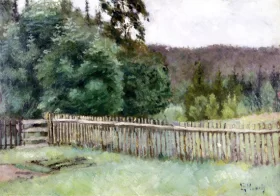
Fence In The Forest
By Edvard MunchSizes starting at kr2.839.00
Fisherman By The Water
By Edvard MunchSizes starting at kr2.809.00
From Sandvika
By Edvard MunchSizes starting at kr2.519.00
Hakloa In Maridalen
By Edvard MunchSizes starting at kr2.959.00
Lake And Forest
By Edvard MunchSizes starting at kr2.719.00Maridalen By Oslo
By Edvard MunchSizes starting at kr2.699.00Small Lake With Boat
By Edvard MunchSizes starting at kr2.959.00
View Of Gruners Garden
By Edvard MunchSizes starting at kr2.849.00
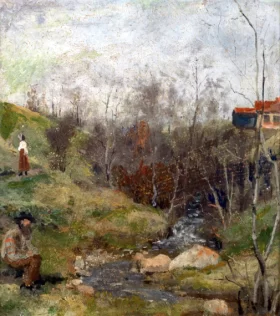
Stream In Spring
By Edvard MunchSizes starting at kr2.719.00
Woodland Landscape With Lake
By Edvard MunchSizes starting at kr3.039.00
Spring Landscape With Snow Plough
By Edvard MunchSizes starting at kr2.749.00
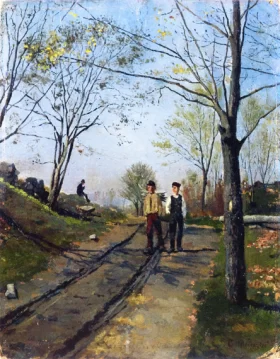
Two Boys On A Country Lane
By Edvard MunchSizes starting at kr2.689.00
Small Waterfall
By Edvard MunchSizes starting at kr2.779.00
Talthusbakken With Gamle Aker Church
By Edvard MunchSizes starting at kr2.989.00From Bunnefjorden
By Edvard MunchSizes starting at kr2.959.00From Maridalen
By Edvard MunchSizes starting at kr3.059.00Man And Woman In A Boat
By Edvard MunchSizes starting at kr2.939.00Man Rowing Towards Land
By Edvard MunchSizes starting at kr2.869.00Ovre Foss Mansion
By Edvard MunchSizes starting at kr2.929.00Akerselva By Slamotgangen
By Edvard MunchSizes starting at kr2.909.00
Spring Landscape
By Edvard MunchSizes starting at kr2.519.00Autumn Rain
By Edvard MunchSizes starting at kr2.399.00
Rowboats At ÅSgåRdstrand
By Edvard MunchSizes starting at kr2.749.00
View From Fossveien Towards Bergfjerdingen
By Edvard MunchSizes starting at kr2.689.00
From Saxegardsgate
By Edvard MunchSizes starting at kr2.989.00
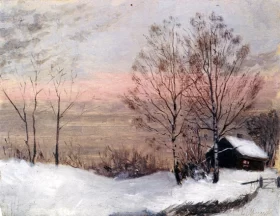
Street In Winter
By Edvard MunchSizes starting at kr2.809.00
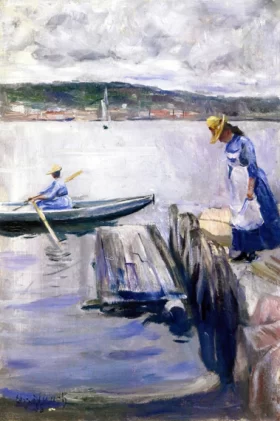
Summer Day On The Pier
By Edvard MunchSizes starting at kr2.929.00The Steamboat Arrives
By Edvard MunchSizes starting at kr2.819.00Ovre Foss In Winter
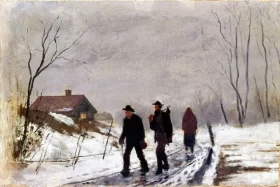
By Edvard MunchSizes starting at kr2.549.00People On The Road In Wet Snow
By Edvard MunchSizes starting at kr2.929.00
View From Fossveien
By Edvard MunchSizes starting at kr2.719.00Old Aker Church
By Edvard MunchSizes starting at kr2.749.00
Old Aker Church
By Edvard MunchSizes starting at kr2.719.00
Gamle Aker Church
By Edvard MunchSizes starting at kr2.659.00
Jar, Apple, Walnut And Coconut
By Edvard MunchSizes starting at kr2.549.00
Nude With Red Skirt
By Edvard MunchSizes starting at kr2.839.00
Standing Female Nude
By Edvard MunchSizes starting at kr3.279.00Nude Seated On The Bed
By Edvard MunchSizes starting at kr2.659.00
Sitting Nude By The Beach
By Edvard MunchSizes starting at kr2.959.00
Nude With Her Back Turned
By Edvard MunchSizes starting at kr2.519.00