사이트 전체 5% 할인 | 결제 시 KMKR5 코드를 사용하세요.
- Choose your Country

사이트 전체 5% 할인 | 결제 시 KMKR5 코드를 사용하세요.
임프레션리즘
Impressionism was a 19th-century art movement that began as a loose association of Paris-based artists whose independent exhibitions brought them to prominence in the 1870s and 1880s. The name of the movement is derived from the title of a Claude Monet work, Impression, Sunrise (Impression, soleil levant), which provoked the critic Louis Leroy to coin the term in a satiric review published in Le Charivari.
Impressionism also describes art created in this style, but outside of the late 19th century time period.
Radicals in their time, early Impressionists broke the rules of academic painting. They began by giving colours, freely brushed, primacy over line, drawing inspiration from the work of painters such as Eugene Delacroix. They also took the act of painting out of the studio and into the modern world. Previously, still lifes and portraits as well as landscapes had usually been painted indoors. The Impressionists found that they could capture the momentary and transient effects of sunlight by painting en plein air. Painting realistic scenes of modern life, they emphasized vivid overall effects rather than details. They used short, “broken” brush strokes of pure and unmixed colour, not smoothly blended, as was customary, in order to achieve the effect of intense colour vibration.
Although the rise of Impressionism in France happened at a time when a number of other painters, including the Italian artists known as the Macchiaioli, and Winslow Homer in the United States, were also exploring plein-air painting, the Impressionists developed new techniques that were specific to the movement. encompassing what its adherents argued was a different way of seeing, it was an art of immediacy and movement, of candid poses and compositions, of the play of light expressed in a bright and varied use of colour.
The public, at first hostile, gradually came to believe that the Impressionists had captured a fresh and original vision, even if it did not receive the approval of the art critics and establishment.
By re-creating the sensation in the eye that views the subject, rather than recreating the subject, and by creating a welter of techniques and forms, Impressionism became a precursor seminal to various movements in painting which would follow, including Neo-Impressionism, Post-Impressionism, Fauvism, and Cubism.
In an atmosphere of change as emperor Napoleon III rebuilt Paris and waged war, the Academie des Beaux-Arts dominated the French art scene in the middle of the 19th century. The Academie was the upholder of traditional standards for French painting, both in content and style. Historical subjects, religious themes, and portraits were valued (landscape and still life were not), and the Academie preferred carefully finished images which mirrored reality when examined closely. Colour was somber and conservative, and the traces of brush strokes were suppressed, concealing the artist’s personality, emotions, and working techniques.
The Academie held an annual, juried art show, the Salon de Paris, and artists whose work displayed in the show won prizes, garnered commissions, and enhanced their prestige. The standards of the juries reflected the values of the Academie, represented by the highly polished works of such artists as Jean-Leon Gerome and Alexandre Cabanel. Some younger artists painted in a lighter and brighter manner than painters of the preceding generation, extending further the realism of Gustave Courbet and the Barbizon school. They were more interested in painting landscape and contemporary life than in recreating scenes from history. each year, they submitted their art to the Salon, only to see the juries reject their best efforts in favour of trivial works by artists working in the approved style. A core group of young realists, Claude Monet, Pierre-Auguste Renoir, Alfred Sisley, and Frederic Bazille, who had studied under Charles Gleyre, became friends and often painted together. They soon were joined by Camille Pissarro, Paul Cezanne, and Armand Guillaumin.
In 1863, the jury rejected The Luncheon on the Grass (Le dejeuner sur l’herbe) by Edouard Manet primarily because it depicted a nude woman with two clothed men at a picnic. While nudes were routinely accepted by the Salon when featured in historical and allegorical paintings, the jury condemned Manet for placing a realistic nude in a contemporary setting. The jury’s sharply worded rejection of Manet’s painting, as well as the unusually large number of rejected works that year, set off a firestorm among French artists. Manet was admired by Monet and his friends, and led the discussions at Cafe Guerbois where the group of artists frequently met.
Artists’ petitions requesting a new Salon des Refuses in 1867, and again in 1872, were denied. In the latter part of 1873, Monet, Renoir, Pissarro, and Sisley organized the Societe Anonyme Cooperative des Artistes Peintres, Sculpteurs, Graveurs (“Cooperative and Anonymous Association of Painters, Sculptors, and engravers”) for the purpose of exhibiting their artworks independently. Members of the association, which soon included Cezanne, Berthe Morisot, and Edgar Degas, were expected to forswear participation in the Salon. The organizers invited a number of other progressive artists to join them in their inaugural exhibition, including the slightly older eugene Boudin, whose example had first persuaded Monet to take up plein air painting years before. Another painter who greatly influenced Monet and his friends, Johan Jongkind, declined to participate, as did Manet. In total, thirty artists participated in their first exhibition, held in April 1874 at the studio of the photographer Nadar. Claude Monet, The Cliff at etretat after the Storm, 1885, Clark Art Institute, Williamstown, Massachusetts
The critical response was mixed, with Monet and Cezanne bearing the harshest attacks. Critic and humorist Louis Leroy wrote a scathing review in the Le Charivari newspaper in which, making wordplay with the title of Claude Monet’s Impression, Sunrise (Impression, soleil levant), he gave the artists the name by which they would become known. Derisively titling his article The exhibition of the Impressionists, Leroy declared that Monet’s painting was at most, a sketch, and could hardly be termed a finished work.
Monet, Sisley, Morisot, and Pissarro may be considered the “purest” Impressionists, in their consistent pursuit of an art of spontaneity, sunlight, and colour. Degas rejected much of this, as he believed in the primacy of drawing over colour and belittled the practice of painting outdoors. Renoir turned against Impressionism for a time in the 1880s, and never entirely regained his commitment to its ideas. Edouard Manet, despite his role as a leader to the group, never abandoned his liberal use of black as a colour, and never participated in the Impressionist exhibitions. He continued to submit his works to the Salon, where his Spanish Singer had won a 2nd class medal in 1861, and he urged the others to do likewise, arguing that “the Salon is the real field of battle” where a reputation could be made.
Among the artists of the core group (minus Bazille, who had died in the Franco-Prussian War in 1870), defections occurred as Cezanne, followed later by Renoir, Sisley, and Monet, abstained from the group exhibitions in order to submit their works to the Salon. Disagreements arose from issues such as uillaumin’s membership in the group, championed by Pissarro and Cezanne against opposition from Monet and Degas, who thought him unworthy. Degas invited Mary Cassatt to display her work in the 1879 exhibition, but he also caused dissention by insisting on the inclusion of Jean-Francois Raffaelli, Ludovic Lepic, and other realists who did not represent Impressionist practices, leading Monet in 1880 to accuse the Impressionists of “opening doors to first-come daubers”. The group divided over the invitation of Signac and Seurat to exhibit with them in 1886. Pissarro was the only artist to show at all eight Impressionist exhibitions.
The individual artists saw few financial rewards from the Impressionist exhibitions, but their art gradually won a degree of public acceptance. Their dealer, Durand-Ruel, played a major role in this as he kept their work before the public and arranged shows for them in London and New York. Although Sisley would die in poverty in 1899, Renoir had a great Salon success in 1879. Financial security came to Monet in the early 1880s and to Pissarro by the early 1890s. By this time the methods of Impressionist painting, in a diluted form, had become commonplace in Salon art.
Painters throughout history had occasionally used these methods, but Impressionists were the first to use all of them together, and with such boldness. earlier artists whose works display these techniques include Frans Hals, Diego Velazquez, Peter Paul Rubens, John Constable, and J. M. W. Turner.
French painters who prepared the way for Impressionism include the Romantic colourist Eugene Delacroix, the leader of the realists Gustave Courbet, and painters of the Barbizon school such as Theodore Rousseau. The Impressionists learned much from the work of Jean-Baptiste-Camille Corot and Eugene Boudin, who painted from nature in a style that was close to Impressionism, and who befriended and advised the younger artists.
Prior to the Impressionists, other painters, notably such 17th-century Dutch painters as Jan Steen, had focused on common subjects, but their approaches to composition were traditional. They arranged their compositions in such a way that the main subject commanded the viewer’s attention. The Impressionists relaxed the boundary between subject and background so that the effect of an Impressionist painting often resembles a snapshot, a part of a larger reality captured as if by chance. Photography was gaining popularity, and as cameras became more portable, photographs became more candid. Photography inspired Impressionists to capture the moment, not only in the fleeting lights of a landscape, but in the day-to-day lives of people.
The rise of the impressionist movement can be seen in part as a reaction by artists to the newly established medium of photography. The taking of fixed or still images challenged painters by providing a new medium with which to capture reality. Initially photography’s presence seemed to undermine the artist’s depiction of nature and their ability to mirror reality. Both portrait and landscape paintings were deemed somewhat deficient and lacking in truth as photography “produced lifelike images much more efficiently and reliably”. Alfred Sisley, View of the Saint-Martin Canal, Paris, 1870, Musee d’Orsay
Another major influence was Japanese art prints (Japonism), which had originally come into France as wrapping paper for imported goods. The art of these prints contributed significantly to the “snapshot” angles and unconventional compositions which would become characteristic of the movement.
Edgar Degas was both an avid photographer and a collector of Japanese prints. His The Dance Class (La classe de danse) of 1874 shows both influences in its asymmetrical composition. The dancers are seemingly caught off guard in various awkward poses, leaving an expanse of empty floor space in the lower right quadrant.
Read more701–800/3606개 결과 표시

The Coiffure
으로 베르트 모리소크기 시작 ₩321,929
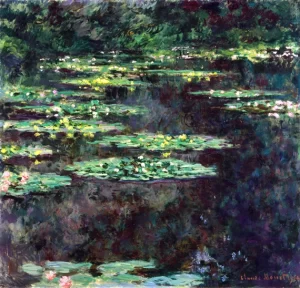
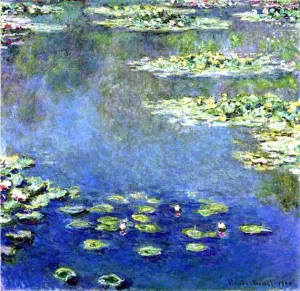
Water Lilies, 1904
으로 클로드 모네크기 시작 ₩235,609
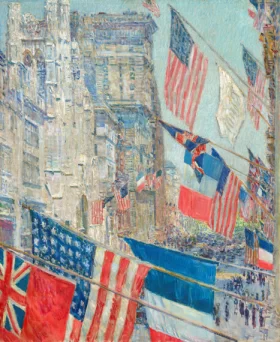
Allies Day, May 1917
으로 차일드 하삼크기 시작 ₩275,769
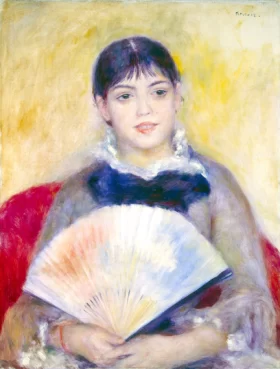
Girl with a Fan 1881
으로 피에르 오귀스트 르누아르크기 시작 ₩286,009
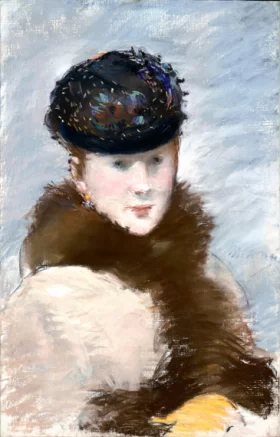
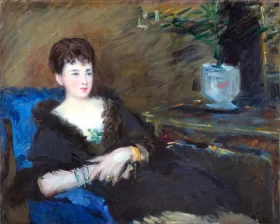
Méry Laurent Wearing a small Toque 1882
으로 에두아르 마네크기 시작 ₩316,669
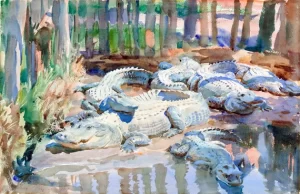
Muddy alligators 1917
으로 존 싱어 사젠트크기 시작 ₩280,759
Nasturtiums
으로 프레드릭 칼 프리제케크기 시작 ₩275,769
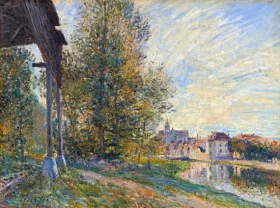
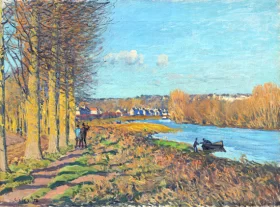
Near Moret-sur-Loing 1881
으로 알프레드 시슬리크기 시작 ₩267,649
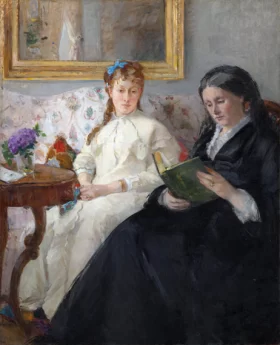
The Mother and Sister of the Artist
으로 베르트 모리소크기 시작 ₩326,519
Three Fishermen in a Boat
으로 구스타브 카일보트크기 시작 ₩289,419
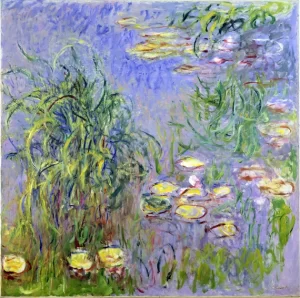
Water Lilies, Cluster of Grass , 1914-17
으로 클로드 모네크기 시작 ₩232,699
Femme a L’ombrelle Assise Dans Le Jardin (Lise Tréhot)
으로 피에르 오귀스트 르누아르크기 시작 ₩272,359
Flags on 57th Street, Winter, 1918
으로 차일드 하삼크기 시작 ₩309,859
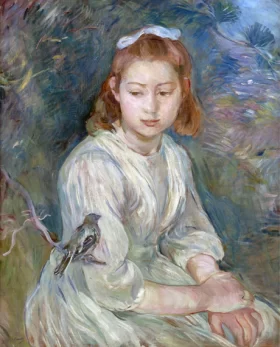
Petite fille à l’oiseau
으로 베르트 모리소크기 시작 ₩275,769
Portrait Of Madame Gely
으로 프레드릭 칼 프리제케크기 시작 ₩272,359
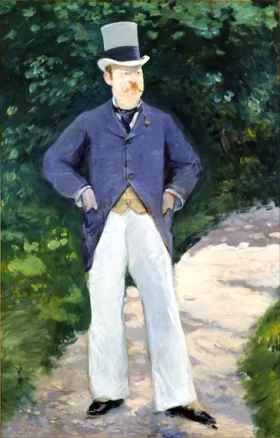
Portrait of Monsieur Brun 1879
으로 에두아르 마네크기 시작 ₩316,669
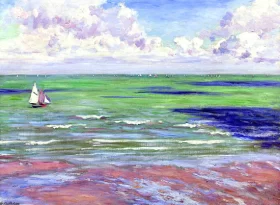
Regattas at Villers
으로 구스타브 카일보트크기 시작 ₩263,759
The Olive Grove 1910
으로 존 싱어 사젠트크기 시작 ₩255,269
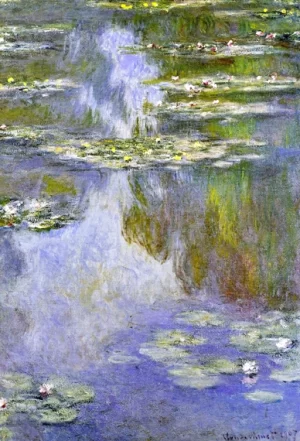
Water Lilies, 1906-07
으로 클로드 모네크기 시작 ₩235,609
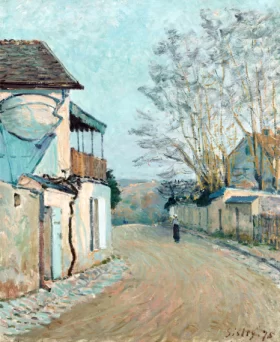
Winter Morning 1874
으로 알프레드 시슬리크기 시작 ₩267,649
By the River
으로 존 싱어 사젠트크기 시작 ₩316,089
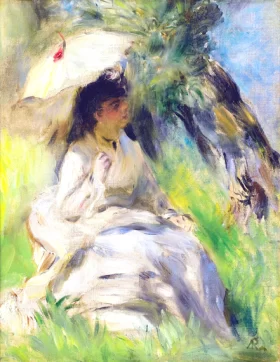
Jeune Femme a L’ombrelle, 1872
으로 피에르 오귀스트 르누아르크기 시작 ₩282,599
Lincoln’s Birthday Flags – 1918
으로 차일드 하삼크기 시작 ₩309,859
Reflections
으로 프레드릭 칼 프리제케크기 시작 ₩279,189
Sunflowers Along the Seine
으로 구스타브 카일보트크기 시작 ₩255,269The Meadow at Veneux-Nadon 1881
으로 알프레드 시슬리크기 시작 ₩263,759
Water Lilies, 1907
으로 클로드 모네크기 시작 ₩229,789
Woman in a Garden
으로 베르트 모리소크기 시작 ₩289,419
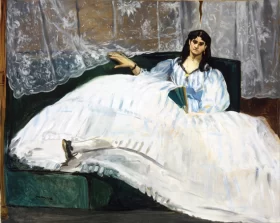
Woman with a Fan 1862
으로 에두아르 마네크기 시작 ₩279,189
Avenue of the Allies- Brazil, Belgium 1918
으로 차일드 하삼크기 시작 ₩309,859
Femme a L’ombrelle Et Enfant
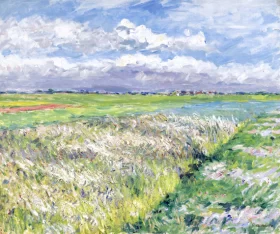
으로 피에르 오귀스트 르누아르크기 시작 ₩272,359Les Champs, Plaine De Gennevilliers, Etude En Jaune Et Vert 1884
으로 구스타브 카일보트크기 시작 ₩246,779
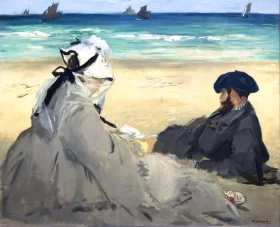
On the Beach 1873
으로 에두아르 마네크기 시작 ₩255,999
Reflections
으로 프레드릭 칼 프리제케크기 시작 ₩248,419
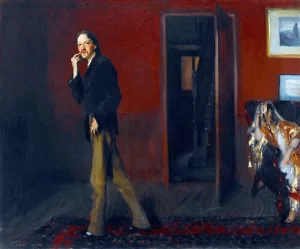
Robert Louis Stevenson and His Wife 1885
으로 존 싱어 사젠트크기 시작 ₩305,079The Meadow at Veneux, Nadon, 1881
으로 알프레드 시슬리크기 시작 ₩263,759
Water Lilies, 1914
으로 클로드 모네크기 시작 ₩226,959
Woman Wearing Gloves
으로 베르트 모리소크기 시작 ₩275,769
Avenue of the Allies, Great Britain, 1918
으로 차일드 하삼크기 시작 ₩282,599
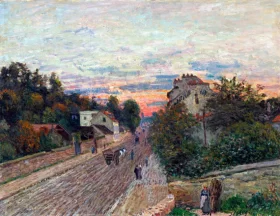
Coucher de Soleil, La Route de Versailles à Chavilles
으로 알프레드 시슬리크기 시작 ₩258,099
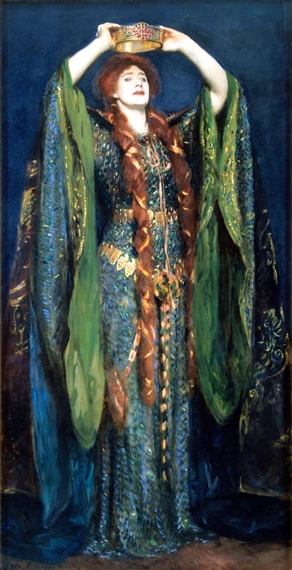
Ellen Terry as Lady Macbeth 1889-4
으로 존 싱어 사젠트크기 시작 ₩370,809
Femme Cueillant Des Fleurs
으로 피에르 오귀스트 르누아르크기 시작 ₩272,359
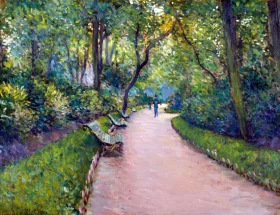
Le Parc Monceau 1877
으로 구스타브 카일보트크기 시작 ₩258,099
Summer Reading
으로 프레드릭 칼 프리제케크기 시작 ₩251,839
Water Lilies, 1908
으로 클로드 모네크기 시작 ₩238,279Woman Lying On Sofa 1873
으로 에두아르 마네크기 시작 ₩286,009
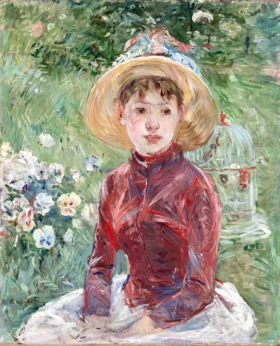
Young Girl with Cage 1885
으로 베르트 모리소크기 시작 ₩275,769
Acrobats at the Cirque Fernando (Francisca and Angelina Wartenberg)
으로 피에르 오귀스트 르누아르크기 시작 ₩312,119
Early Morning on the Avenue in May 1917
으로 차일드 하삼크기 시작 ₩272,359
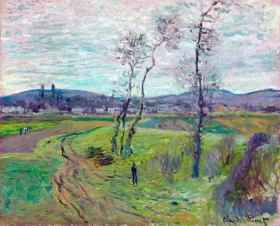
La Plaine De Gennevilliers 1877
으로 구스타브 카일보트크기 시작 ₩255,999
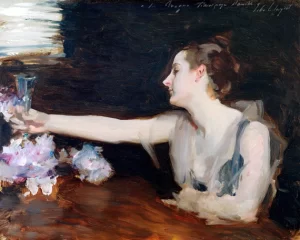
Madame Gautreau Drinking a Toast, 1882-1883
으로 존 싱어 사젠트크기 시작 ₩233,149Portrait of Isabelle Lemonnier 1877
으로 에두아르 마네크기 시작 ₩279,189
Tea In The Garden
으로 프레드릭 칼 프리제케크기 시작 ₩268,939
Water Lilies, 1907
으로 클로드 모네크기 시작 ₩258,099
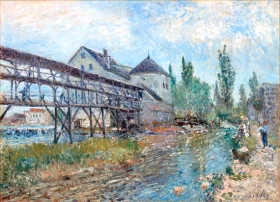
Watermill near Moret
으로 알프레드 시슬리크기 시작 ₩266,599Young Girl with Hat 1892
으로 베르트 모리소크기 시작 ₩279,189
Enfant Assis En Robe Bleue
으로 피에르 오귀스트 르누아르크기 시작 ₩272,359Mrs Carl Meyer and Her Children 1896
으로 존 싱어 사젠트크기 시작 ₩372,259
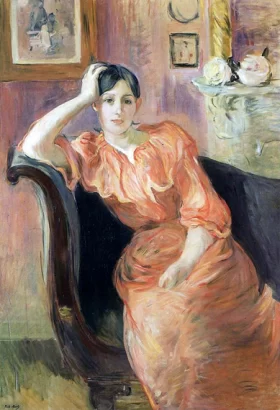
Portrait de Jeanne Pontillon
으로 베르트 모리소크기 시작 ₩303,049
Quai St. Michel 1888
으로 차일드 하삼크기 시작 ₩317,329Rue de La Princesse, Winter (Rue de La Princesse, L’hiver)
으로 알프레드 시슬리크기 시작 ₩249,609
The Basket Of Flowers
으로 프레드릭 칼 프리제케크기 시작 ₩251,839
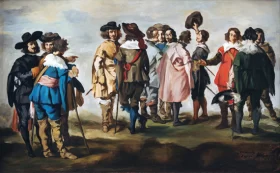
The Little Cavaliers 1860
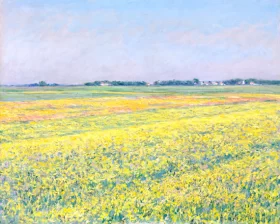
으로 에두아르 마네크기 시작 ₩423,009The Plain of Gennevilliers, Yellow Fields 1884
으로 구스타브 카일보트크기 시작 ₩252,439
Water Lilies, 1907
으로 클로드 모네크기 시작 ₩272,259
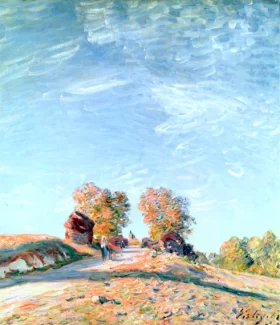
Hill Path in Sunlight, 1892
으로 알프레드 시슬리크기 시작 ₩243,939
La Jeune Fille Au Cygne Ou La Jeune Fille Au Héron
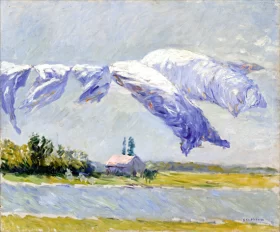
으로 피에르 오귀스트 르누아르크기 시작 ₩279,189Laundry Drying, Petit Gennevilliers, 1888
으로 구스타브 카일보트크기 시작 ₩253,089
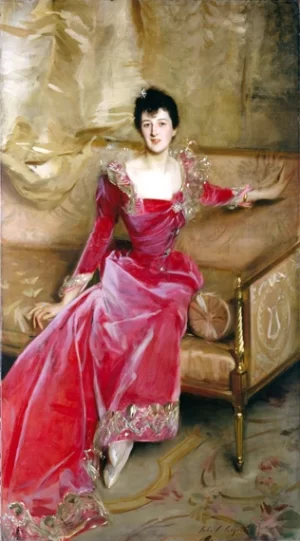
Mrs Hugh Hammersley 1892
으로 존 싱어 사젠트크기 시작 ₩379,419Nymphéas
으로 클로드 모네크기 시작 ₩252,439
Portrait of a Woman
으로 베르트 모리소크기 시작 ₩272,359
Rainy Midnight
으로 차일드 하삼크기 시작 ₩249,609
The Birdcage
으로 프레드릭 칼 프리제케크기 시작 ₩255,259
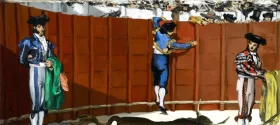
The Bullfight 1864
으로 에두아르 마네크기 시작 ₩500,409
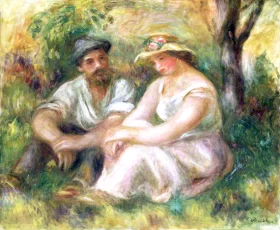
Conversation
으로 피에르 오귀스트 르누아르크기 시작 ₩300,189
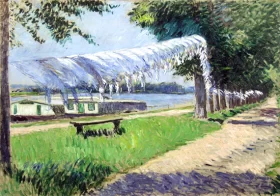
Drying Laundry on the Banks of the Seine, 1892
으로 구스타브 카일보트크기 시작 ₩269,429
Fifth Avenue Nocturne 1890
으로 차일드 하삼크기 시작 ₩246,779L’orvanne et Le Canal Du Loing en Hiver
으로 알프레드 시슬리크기 시작 ₩249,609Portrait of Millicent Leveson Gower, Duchess of Sutherland 1904 Rw
으로 존 싱어 사젠트크기 시작 ₩379,419
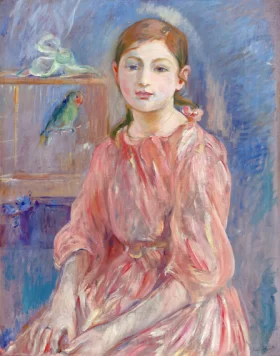
The Artist’s Daughter with a Parakeet 1890
으로 베르트 모리소크기 시작 ₩279,189The Breakfast Room
으로 프레드릭 칼 프리제케크기 시작 ₩251,839
View of the Paris Universal Exhibition 1867
으로 에두아르 마네크기 시작 ₩327,189
Water Lilies, 1908
으로 클로드 모네크기 시작 ₩249,609
Ada Rehan
으로 존 싱어 사젠트크기 시작 ₩391,259
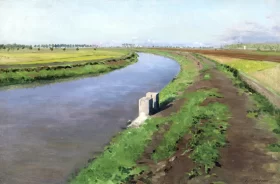
Bord D’un Canal, Près De Naples 1872
으로 구스타브 카일보트크기 시작 ₩280,759
Croquet at Boulogne 1871
으로 에두아르 마네크기 시작 ₩355,719
Double Portrait De Jeanne Baudot
으로 피에르 오귀스트 르누아르크기 시작 ₩371,529
Nocturne, Railway Crossing, Chicago 1893
으로 차일드 하삼크기 시작 ₩266,599
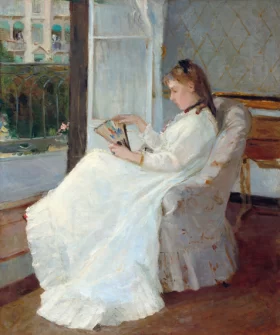
The Artist’s Sister at a Window 1869
으로 베르트 모리소크기 시작 ₩272,359The Garden Chair
으로 프레드릭 칼 프리제케크기 시작 ₩279,189
Water Lilies, 1907
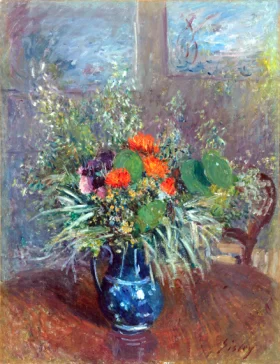
으로 클로드 모네크기 시작 ₩266,599Wild Flowers 1875
으로 알프레드 시슬리크기 시작 ₩255,269
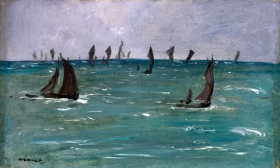
Boats at Berck-sur-Mer 1873
으로 에두아르 마네크기 시작 ₩294,919
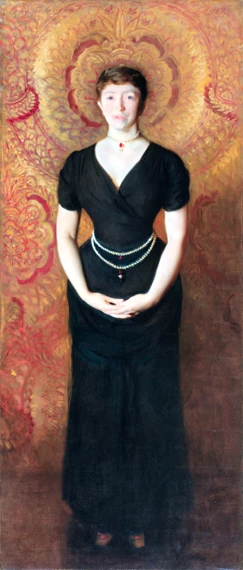
Isabella Stewart Gardner, 1888
으로 존 싱어 사젠트크기 시작 ₩464,179Jeunes Filles Jouant Au Volant
으로 피에르 오귀스트 르누아르크기 시작 ₩326,519
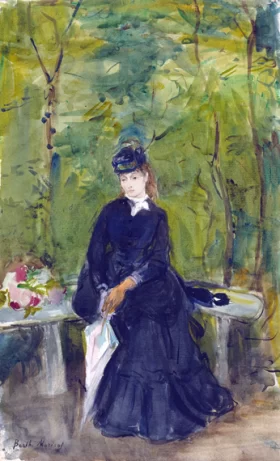
The Artist’s Sister Edma Seated in a Park 1864
으로 베르트 모리소크기 시작 ₩326,869The El, New York (Sixth Avenue El–Nocturne) 1894
으로 차일드 하삼크기 시작 ₩255,269
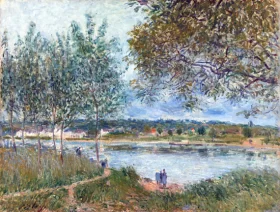
The Path to the Old Ferry
으로 알프레드 시슬리크기 시작 ₩264,739
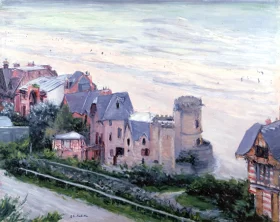
Trouville, Beach and Villas 1882
으로 구스타브 카일보트크기 시작 ₩258,909
Water Lilies, 1907
으로 클로드 모네크기 시작 ₩241,109