사이트 전체 5% 할인 | 결제 시 KMKR5 코드를 사용하세요.
- Choose your Country

사이트 전체 5% 할인 | 결제 시 KMKR5 코드를 사용하세요.
피에르 오귀스트 르누아르
Pierre-Auguste Renoir ( 25 February 1841 – 3 December 1919) was a French painter originally associated with the Impressionist movement. His early works were typically Impressionist snapshots of real life, full of sparkling colour and light. By the mid-1880s, however, he had broken with the movement to apply a more disciplined, formal technique to portraits and figure paintings, particularly of women as a celebrator of beauty and feminine sensuality.
Pierre-Auguste Renoir was born in Limoges, Haute-Vienne, France, in 1841. Renoir was born into a family of artisans. His father, a tailor who had seven children, moved with his family to Paris about 1845. Renoir’s family moved to Paris in search of more favorable prospects. The location of their home, in rue d’Argenteuil in central Paris, placed Renoir in proximity to the Louvre. Renoir demonstrated his gift at an early age. Quickly recognizing his talent, his parents apprenticed him, at age 13, to work in a porcelain factory, where he learned to decorate plates with bouquets of flowers.
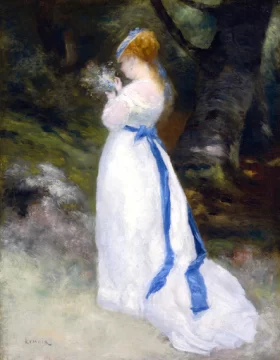
His skill and the great pleasure he took in his work soon convinced him he should study painting in earnest. Having saved a little money, he decided, in 1862, to take evening courses in drawing and anatomy at the École des Beaux-Arts as well as painting lessons at the studio of Charles Gleyre, a Swiss painter who had been a student of the 19th-century Neoclassical painter Jean-Auguste-Dominque Ingres. Although the academic style of his teacher did not suit Renoir, he nevertheless accepted its discipline in order to acquire the elementary skills needed to become a painter. It was here that he met Alfred Sisley, Frédéric Bazille, and Claude Monet. Renoir had his first success at the Salon of 1868 with his painting Lise with a Parasol (1867), which depicted Lise Tréhot, his lover at the time.
Renoir was inspired by the style and subject matter of previous modern painters Camille Pissarro and Édouard Manet. After a series of rejections by the Salon juries, he joined forces with Monet, Sisley, Pissarro, and several other artists to mount the first Impressionist exhibition in April 1874, in which Renoir displayed six paintings. Although the critical response to the exhibition was largely unfavorable, Renoir’s work was comparatively well received. That same year, two of his works were shown with Durand-Ruel in London.
Conditions were ripe for the birth of a new pictorial language, and Impressionism, bursting upon the scene, attracted notoriety with the first Impressionist exposition of 1874, held independently of the official Salon. It took 10 years for the movement to acquire its definitive form, its independent vision, and its unique perceptiveness. But one can point to 1874 as the year of departure for the movement that subsequently spawned modern art. Renoir’s work is a perfect illustration of this new approach in thought and technique. By using small, multicoloured strokes, he evoked the vibration of the atmosphere, the sparkling effect of foliage, and especially the luminosity of a young woman’s skin in the outdoors. Renoir and his companions stubbornly strove to produce light-suffused paintings from which black was excluded, but their pursuits led to many disappointments: their paintings, so divergent from traditional formulas, were frequently rejected by the juries of the Salon and were extremely difficult to sell.
Renoir, because of his fascination with the human figure, was distinctive among the others, who were more interested in landscape. Thus, he obtained several orders for portraits and was introduced, thanks to the publisher Georges Charpentier, to upper-middle-class society, from whom he obtained commissions for portraits, most notably of women and children.
Renoir mastered the ability to convey his immediate visual impressions, and his paintings showed great vitality, emphasizing the pleasures of life despite the financial worries that troubled him. He displayed mostly portraits at the second Impressionist exhibition in 1876. He contributed a more diverse range of paintings the next year when the group presented its third exhibition; several of his masterpieces date from this period: La Loge (1874; Theatre Box), Dance at Le Moulin de la Galette (1876), Luncheon of the Boating Party (1880–81). By the end of the 1870s, particularly after the success of his painting Mme Charpentier and her Children (1878) at the Salon of 1879, Renoir was a successful and fashionable painter. Charpentier organized a personal exposition for the works of Renoir in 1879 in the gallery La Vie Moderne.
In 1881 and 1882 Renoir made several trips to Algeria, Italy, and Provence, and these eventually had a considerable effect on his art and on his life. During his journey to Italy, he discovered Raphael and the hallmarks of classicism: the beauty of drawing, the purity of a clear line to define a form, and the expressive force of smooth painting when used to enhance the suppleness and modeling of a body.
In 1890, he married Aline Victorine Charigot, a dressmaker twenty years his junior, who, along with a number of the artist’s friends, had already served as a model for Le Déjeuner des canotiers (Luncheon of the Boating Party; she is the woman on the left playing with the dog) in 1881, and with whom he had already had a child, Pierre, in 1885. After marrying, Renoir painted many scenes of his wife and daily family life including their children and their nurse, Aline’s cousin Gabrielle Renard. The Renoirs had three sons: Pierre Renoir (1885–1952), who became a stage and film actor; Jean Renoir (1894–1979), who became a filmmaker of note; and Claude Renoir (1901–1969), who became a ceramic artist.
Around 1892, Renoir developed rheumatoid arthritis. In 1907, he moved to the warmer climate of “Les Collettes,” a farm at the village of Cagnes-sur-Mer, Provence-Alpes-Côte d’Azur, close to the Mediterranean coast. Renoir painted during the last twenty years of his life even after his arthritis severely limited his mobility. He developed progressive deformities in his hands and ankylosis of his right shoulder, requiring him to change his painting technique. It has often been reported that in the advanced stages of his arthritis, he painted by having a brush strapped to his paralyzed fingers, but this is erroneous; Renoir remained able to grasp a brush, although he required an assistant to place it in his hand.
Renoir’s paintings during this period still embodied a cheerful attitude toward life. His themes became more personal and intimate, focusing on portraits of his wife, his children, and Gabrielle, his maid, who often also posed for his nude paintings. His still lifes were composed of flowers and fruits from his own garden, and the landscapes were those that surrounded him. The nudes, especially, reflect the serenity that he found in his work. Examples of this period include The Artist’s Family (1896) and Girl Sleeping (c. 1897). He attempted to embody his admiration for the female form in sculpture, with the assistance of young Richard Guino. Since Renoir was no longer able to do sculpture himself, Guino became, about 1913, the skillful instrument who willingly followed his directions. He yielded before the personality of Renoir and succeeded so well that the works have all the qualities of Renoir’s style.
Renoir’s wife died in 1915 after having returned from Gérardmer, where she had gone to see their son Jean, who had been seriously wounded in the war, and who would go on to become an important filmmaker. Renoir survived his wife by four years. Several months before his death, he was able to go to Paris to see his Portrait of Madame Georges Charpentier, which had been recently acquired by the state. On that occasion, In 1919, several friends wheeled him for the last time through the Louvre to view the masterpieces that he had venerated throughout his life.
Renoir died at Cagnes-sur-Mer on 3 December 1919.
Renoir’s, Au Moulin de la Galette became one of the world’s most expensive paintings when it sold for $78 million back in 1990 at Sotheby’s in New York City, New York, L’ombrelle sold for £9,673,250 at auction inFfeb 2013.
Read more101–200/581개 결과 표시

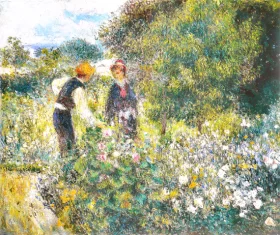
La Cueillette Des Fleurs
으로 피에르 오귀스트 르누아르크기 시작 ₩272,359
Woman in a Landscape, Circa 1890
으로 피에르 오귀스트 르누아르크기 시작 ₩275,769
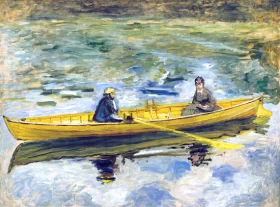
Claude Monet and Mrs Henriot, 1880
으로 피에르 오귀스트 르누아르크기 시작 ₩297,509
Portrait De Cézanne
으로 피에르 오귀스트 르누아르크기 시작 ₩279,189
Mussel-Fishers at Berneval
으로 피에르 오귀스트 르누아르크기 시작 ₩344,829
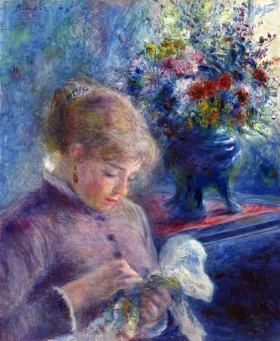
Young Woman Sewing
으로 피에르 오귀스트 르누아르크기 시작 ₩275,769
Portrait of Nini Lopez 1876
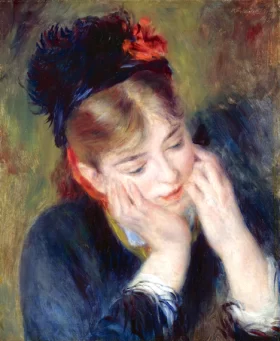
으로 피에르 오귀스트 르누아르크기 시작 ₩299,649Réflexion
으로 피에르 오귀스트 르누아르크기 시작 ₩275,769
Portrait De Madame Adela Ocampo De Heimendhal
으로 피에르 오귀스트 르누아르크기 시작 ₩275,769
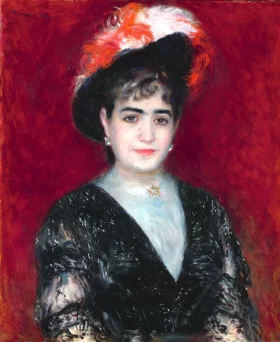
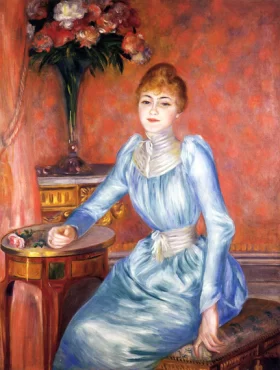
Portrait De Madame Josse Bernheim-Dauberville
으로 피에르 오귀스트 르누아르크기 시작 ₩279,189
Mr. and Mrs. Gaston Bernheim De Villers
으로 피에르 오귀스트 르누아르크기 시작 ₩279,189
La Promenade
으로 피에르 오귀스트 르누아르크기 시작 ₩316,669Lise in a Straw Hat
으로 피에르 오귀스트 르누아르크기 시작 ₩275,769
L’algérienne
으로 피에르 오귀스트 르누아르크기 시작 ₩272,359
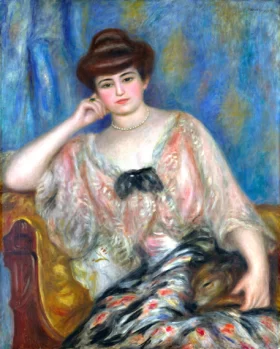
Misia Sert
으로 피에르 오귀스트 르누아르크기 시작 ₩279,189
Portrait of the Countess of Pourtalès 1877
으로 피에르 오귀스트 르누아르크기 시작 ₩286,009Julie Manet 1887
으로 피에르 오귀스트 르누아르크기 시작 ₩275,769
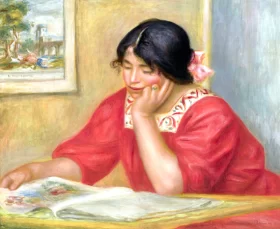
Léontine Lisant
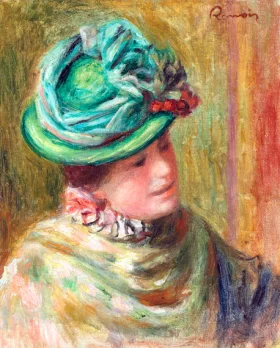
으로 피에르 오귀스트 르누아르크기 시작 ₩275,769Study, Jeanne Baudot in Green Hat, 1896
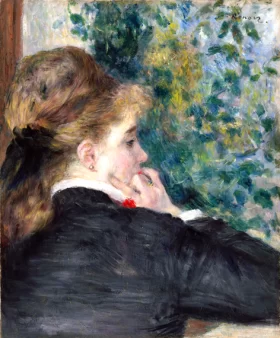
으로 피에르 오귀스트 르누아르크기 시작 ₩279,189Pensive, La Songeuse Or Day Dreaming
으로 피에르 오귀스트 르누아르크기 시작 ₩272,359
Portrait De Femme Au Bandeau Vert
으로 피에르 오귀스트 르누아르크기 시작 ₩286,009
Portrait De Lise
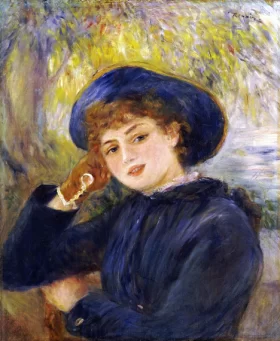
으로 피에르 오귀스트 르누아르크기 시작 ₩282,599Portrait of Madamoiselle Demarsy
으로 피에르 오귀스트 르누아르크기 시작 ₩275,769
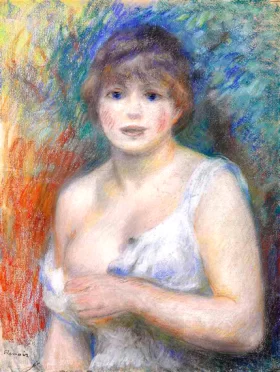
Portrait De Jeanne Samary
으로 피에르 오귀스트 르누아르크기 시작 ₩289,419
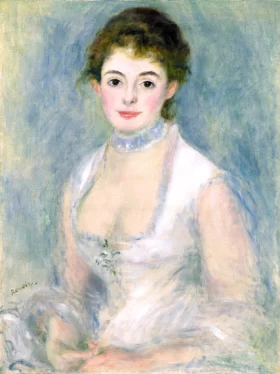
Madame Henriot
으로 피에르 오귀스트 르누아르크기 시작 ₩289,419
Young Girl Painting (La Toilette), 1894
으로 피에르 오귀스트 르누아르크기 시작 ₩272,359
Young Girl Holding at Bouquet of Tulips
으로 피에르 오귀스트 르누아르크기 시작 ₩272,359
Victor Choquet
으로 피에르 오귀스트 르누아르크기 시작 ₩282,599Blonde Woman with a Rose
으로 피에르 오귀스트 르누아르크기 시작 ₩275,769Red Hat
으로 피에르 오귀스트 르누아르크기 시작 ₩282,599
Two Girls Reading
으로 피에르 오귀스트 르누아르크기 시작 ₩272,359
Red Ribbon Hat, Circa 1895
으로 피에르 오귀스트 르누아르크기 시작 ₩292,829Promenade
으로 피에르 오귀스트 르누아르크기 시작 ₩279,189
The Beautiful Sicilian
으로 피에르 오귀스트 르누아르크기 시작 ₩292,829
La Toilette
으로 피에르 오귀스트 르누아르크기 시작 ₩296,239
Washerwomen
으로 피에르 오귀스트 르누아르크기 시작 ₩272,359
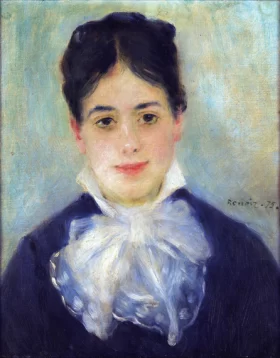
Lady Smiling (Portrait of Alphonsine Fournaise)
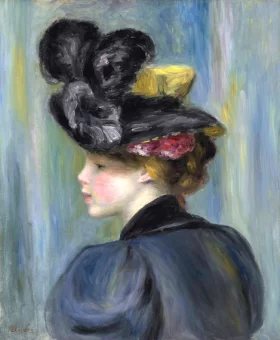
으로 피에르 오귀스트 르누아르크기 시작 ₩282,599Woman with Red Bodice and Black Hat, 1894
으로 피에르 오귀스트 르누아르크기 시작 ₩272,359
Young Woman in the Hat of Paille, 1890
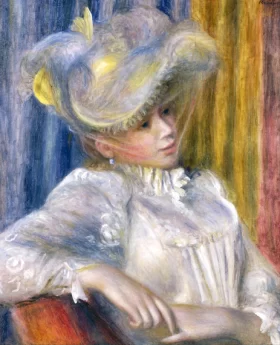
으로 피에르 오귀스트 르누아르크기 시작 ₩275,769Woman in White Hat, 1892
으로 피에르 오귀스트 르누아르크기 시작 ₩272,359
Woman with a Hat
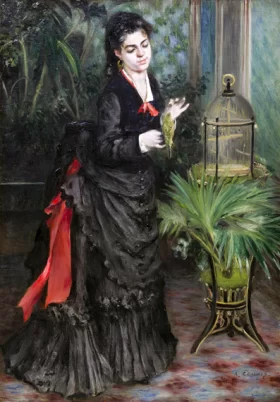
으로 피에르 오귀스트 르누아르크기 시작 ₩275,769Woman with Parrot
으로 피에르 오귀스트 르누아르크기 시작 ₩299,649Woman Leaning, 1887
으로 피에르 오귀스트 르누아르크기 시작 ₩286,009Young Girl with Cat
으로 피에르 오귀스트 르누아르크기 시작 ₩279,189
Young Woman in Black Hat, 1895
으로 피에르 오귀스트 르누아르크기 시작 ₩275,769Woman in the Garden, Circa 1890
으로 피에르 오귀스트 르누아르크기 시작 ₩275,769Young Woman in Red Dress 1892
으로 피에르 오귀스트 르누아르크기 시작 ₩272,359
Young Woman in Hat, 1912
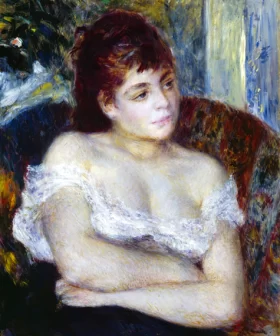
으로 피에르 오귀스트 르누아르크기 시작 ₩258,679Woman in an Armchair
으로 피에르 오귀스트 르누아르크기 시작 ₩272,359
The Laundress
으로 피에르 오귀스트 르누아르크기 시작 ₩303,049
The Milliner
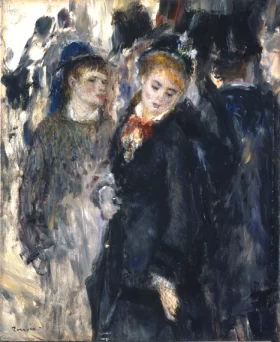
으로 피에르 오귀스트 르누아르크기 시작 ₩286,009Young Girls
으로 피에르 오귀스트 르누아르크기 시작 ₩275,769
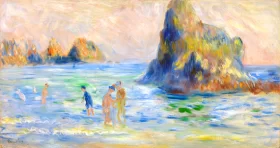
Moulin Huet Bay, Guernsey
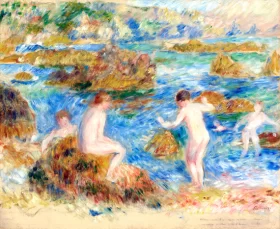
으로 피에르 오귀스트 르누아르크기 시작 ₩367,419Naked Boys in the Rocks at Guernsey, 1883
으로 피에르 오귀스트 르누아르크기 시작 ₩275,769
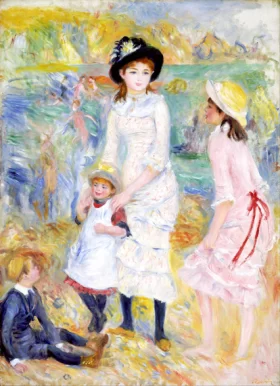
Children on the Seashore, Guernsey
으로 피에르 오귀스트 르누아르크기 시작 ₩272,359Baigneuses, Circa 1892
으로 피에르 오귀스트 르누아르크기 시작 ₩272,359Children on the Seashore, Guernsey
으로 피에르 오귀스트 르누아르크기 시작 ₩292,829
Figures on the Beach
으로 피에르 오귀스트 르누아르크기 시작 ₩279,969
Adrienne 1878
으로 피에르 오귀스트 르누아르크기 시작 ₩286,009
Gabrielle Au Miroir
으로 피에르 오귀스트 르누아르크기 시작 ₩279,189
Madeleine Au Corsage Blanc Et Bouquet De Fleurs
으로 피에르 오귀스트 르누아르크기 시작 ₩262,099
Femme Au Corsage Rouge
으로 피에르 오귀스트 르누아르크기 시작 ₩286,009Bust of a Woman 1895
으로 피에르 오귀스트 르누아르크기 시작 ₩279,189Madame Robert de Bonnieres
으로 피에르 오귀스트 르누아르크기 시작 ₩286,009Ambroise Vollard Dressed as a Toreador
으로 피에르 오귀스트 르누아르크기 시작 ₩275,769Eugène Murer (Hyacinthe-Eugène Meunier)
으로 피에르 오귀스트 르누아르크기 시작 ₩272,359
Albert Cahen D’anvers 1881
으로 피에르 오귀스트 르누아르크기 시작 ₩279,189
Frederic Bazille Painting ‘The Heron’
으로 피에르 오귀스트 르누아르크기 시작 ₩303,049
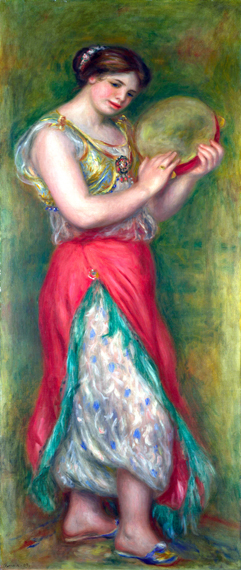
Dancing Girl with Tambourine
으로 피에르 오귀스트 르누아르크기 시작 ₩421,509
Dancing Girl with Castanets
으로 피에르 오귀스트 르누아르크기 시작 ₩424,879
Girl with a Basket of Fish
으로 피에르 오귀스트 르누아르크기 시작 ₩532,179
Girl with a Basket of Oranges
으로 피에르 오귀스트 르누아르크기 시작 ₩528,839
In Brittany
으로 피에르 오귀스트 르누아르크기 시작 ₩272,359Canotage a Bougival
으로 피에르 오귀스트 르누아르크기 시작 ₩275,769
Fog on Guernsey
으로 피에르 오귀스트 르누아르크기 시작 ₩283,479Dans Les Roses (Madame Léon Clapisson)
으로 피에르 오귀스트 르누아르크기 시작 ₩279,189Gabrielle Lisant, 1910
으로 피에르 오귀스트 르누아르크기 시작 ₩286,009
Gabrielle in a Red Dress 1908
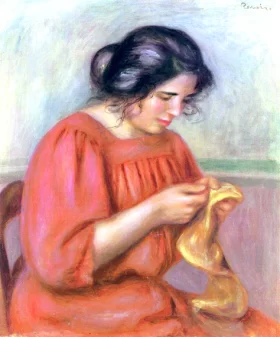
으로 피에르 오귀스트 르누아르크기 시작 ₩272,359Gabrielle Mending
으로 피에르 오귀스트 르누아르크기 시작 ₩272,359
Gabrielle
으로 피에르 오귀스트 르누아르크기 시작 ₩275,769Gabrielle, 1903
으로 피에르 오귀스트 르누아르크기 시작 ₩275,769
Gabriella at the Black Scarf, Circa 1905
으로 피에르 오귀스트 르누아르크기 시작 ₩282,599
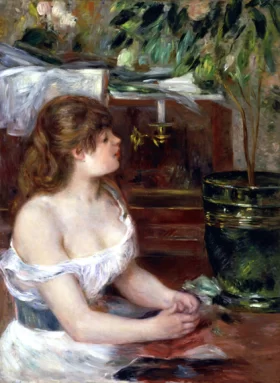
The Green Jardinière
으로 피에르 오귀스트 르누아르크기 시작 ₩292,829
Portrait of Rapha
으로 피에르 오귀스트 르누아르크기 시작 ₩320,069Young Girl with Daisies
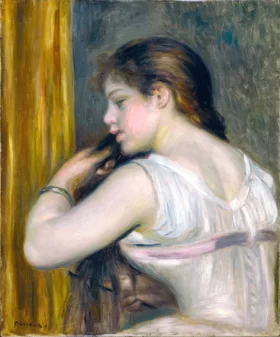
으로 피에르 오귀스트 르누아르크기 시작 ₩272,359Jeune Fille Se Peignant
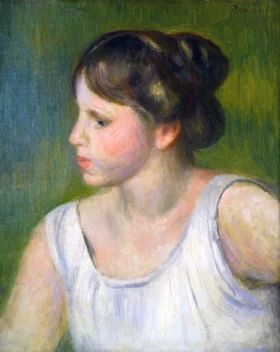
으로 피에르 오귀스트 르누아르크기 시작 ₩272,359Head of a Young Girl
으로 피에르 오귀스트 르누아르크기 시작 ₩286,009Jeune Fille En Rose
으로 피에르 오귀스트 르누아르크기 시작 ₩286,009Going in a Wood, Woman with Child in the Arms, 1900
으로 피에르 오귀스트 르누아르크기 시작 ₩282,599
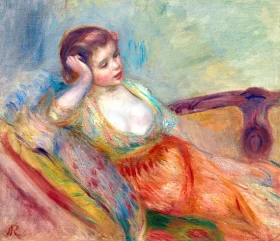
Jeune Fille Assise Sur Un Sofa
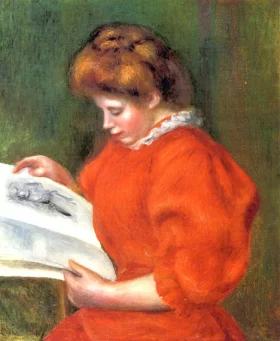
으로 피에르 오귀스트 르누아르크기 시작 ₩268,939Young Woman Looking at a Print
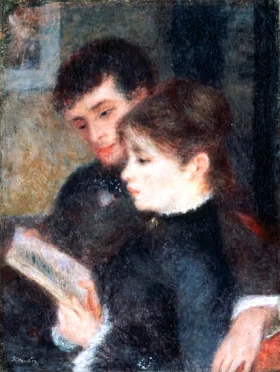
으로 피에르 오귀스트 르누아르크기 시작 ₩275,769Couple Reading
으로 피에르 오귀스트 르누아르크기 시작 ₩289,419
Femme Lisant Sur Un Banc
으로 피에르 오귀스트 르누아르크기 시작 ₩286,009
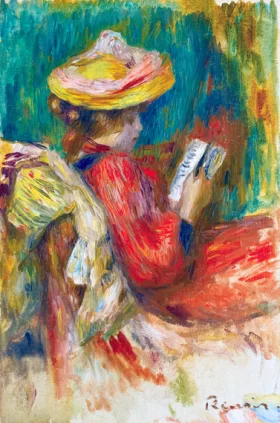
Femme Lisant
으로 피에르 오귀스트 르누아르크기 시작 ₩286,009Femme Lisant
으로 피에르 오귀스트 르누아르크기 시작 ₩279,189Gabrielle Reading 1906
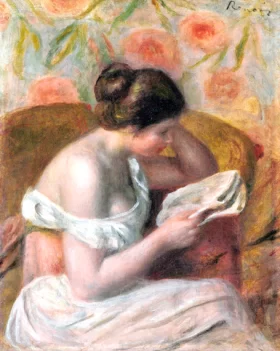
으로 피에르 오귀스트 르누아르크기 시작 ₩272,359Jeune Femme Lisant
으로 피에르 오귀스트 르누아르크기 시작 ₩272,359Reading Woman 1900
으로 피에르 오귀스트 르누아르크기 시작 ₩272,359
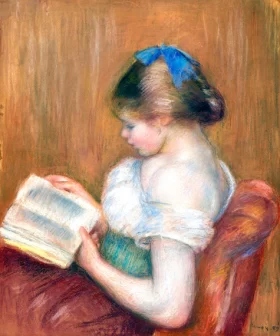
Jeune Fille Lisant
으로 피에르 오귀스트 르누아르크기 시작 ₩309,859
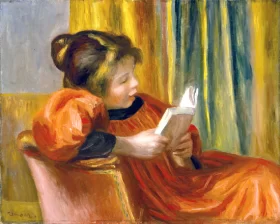
Girl Reading
으로 피에르 오귀스트 르누아르크기 시작 ₩279,189