사이트 전체 5% 할인 | 결제 시 KMKR5 코드를 사용하세요.
- Choose your Country

사이트 전체 5% 할인 | 결제 시 KMKR5 코드를 사용하세요.
티치안 베첼리오
Tiziano Vecelli or Vecellio (c.1488/90– 27 August 1576)) known in English as Titian, the greatest Italian Renaissance painter of the Venetian school. He was recognized early in his own lifetime as a supremely talented painter, and his reputation has in the intervening centuries never suffered a decline. In 1590 the art theorist Giovanni Lomazzo declared him “the sun amidst small stars not only among the Italians but all the painters of the world.”
The traditional date of Titian’s birth was long given as 1477, but most later critics favoured the date of 1488/90. Titian was the son of a modest official, Gregorio di Conte dei Vecelli, and his wife, Lucia. He was born in the small village of Pieve di Cadore, located high amid mountain peaks of the Alps, straight north of Venice and not far from the Austrian Tyrol. At the age of nine he set out for Venice with his brother, Francesco, to live there with an uncle and to become an apprentice to Sebastiano Zuccato, a master of mosaics. The boy soon passed to the workshop of the Bellini family, where his true teacher became Giovanni Bellini, the greatest Venetian painter of the day.
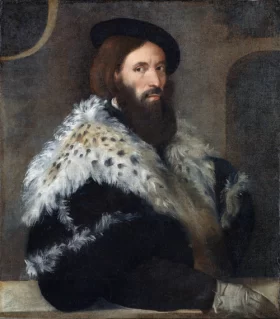
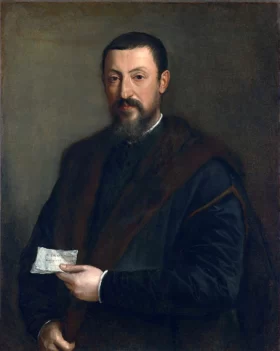
A fresco of Hercules on the Morosini Palace is said to have been one of Titian’s earliest works. Others were the Bellini-esque so-called Gypsy Madonna in Vienna, and the Visitation of Mary and Elizabeth (from the convent of Sant’Andrea), now in the Accademia, Venice. A Man with a Quilted Sleeve is an early portrait, painted around 1509 and described by Giorgio Vasari in 1568. Scholars long believed it depicted Ludovico Ariosto, but now think it is of Gerolamo Barbarigo. Rembrandt borrowed the composition for his self-portraits.
Titian joined Giorgione as an assistant, but many contemporary critics already found Titian’s work more impressive—for example, in exterior frescoes (now almost totally destroyed) that they collaborated on for the Fondaco dei Tedeschi (state-warehouse for the German merchants). Their relationship evidently contained a significant element of rivalry. Distinguishing between their work during this period remains a subject of scholarly controversy. A substantial number of attributions have moved from Giorgione to Titian in the 20th century, with little traffic the other way. One of the earliest known Titian works, Christ Carrying the Cross in the Scuola Grande di San Rocco, depicting the Ecce Homo scene, was long regarded as by Giorgione.
Titian’s talent in fresco is shown in those he painted in 1511 at Padua in the Carmelite church and in the Scuola del Santo, some of which have been preserved, among them the Meeting at the Golden Gate, and three scenes (Miracoli di sant’Antonio) from the life of St. Anthony of Padua, The Miracle of the Jealous Husband, which depicts the Murder of a Young Woman by Her Husband, A Child Testifying to Its Mother’s Innocence, and The Saint Healing the Young Man with a Broken Limb.
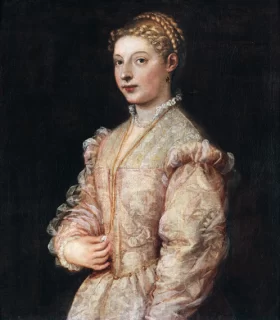
Sometime in the early 1520s Titian brought to his house in Venice a young woman from Cadore whose name was Cecilia. Two sons were born in 1524 and 1525, first Pomponio, who became a priest, and second Orazio, later a painter and Titian’s chief assistant. During Cecilia’s grave illness in 1525, Titian married her. She recovered and later gave birth to two daughters, Lavinia (born 1529/30) and another who died in infancy. On Cecilia’s death in 1530, the artist was disconsolate and he never remarried.
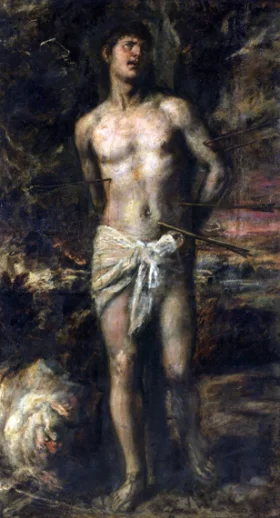
Titian was then at the height of his fame, and towards 1521, following the production of a figure of St. Sebastian for the papal legate in Brescia (of which there are numerous replicas), purchasers pressed for his work. Titian’s skill with colour is exemplified by his Danaë, one of several mythological paintings, or “poesie” (“poems”) as the painter called them. This painting was done for Alessandro Farnese, but a later variant was produced for Philip II, for whom Titian painted many of his most important mythological paintings. Another famous painting is Bacchus and Ariadne, depicting Theseus, whose ship is shown in the distance and who has just left Ariadne at Naxos, when Bacchus arrives, jumping from his chariot, drawn by two cheetahs, and falling immediately in love with Ariadne. Bacchus raised her to heaven. Her constellation is shown in the sky.
During the next period (1530–1550), Titian developed the style introduced by his dramatic Death of St. Peter Martyr. In 1538, the Venetian government, dissatisfied with Titian’s neglect of his work for the ducal palace, ordered him to refund the money he had received, and Il Pordenone, his rival of recent years, was installed in his place. However, at the end of a year Pordenone died, and Titian, who meanwhile applied himself diligently to painting in the hall the Battle of Cadore, was reinstated.
At this time also, during his visit to Rome, the artist began a series of reclining Venuses: The Venus of Urbino of the Uffizi, Venus and Love at the same museum, Venus—and the Organ-Player, Madrid, which shows the influence of contact with ancient sculpture. Giorgione had already dealt with the subject in his Dresden picture, finished by Titian, but here a purple drapery substituted for a landscape background changed, by its harmonious colouring, the whole meaning of the scene.
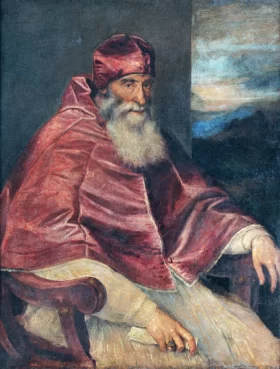
Among portrait-painters Titian is compared to Rembrandt and Velázquez, with the interior life of the former, and the clearness, certainty, and obviousness of the latter. These qualities show in the Portrait of Pope Paul III of Naples, or the sketch of the same Pope Paul III and his Grandsons, the Portrait of Pietro Aretino of the Pitti Palace, the Portrait of Isabella of Portugal (Madrid), and the series of Emperor Charles V of the same museum, the Charles V with a Greyhound (1533), and especially the Equestrian Portrait of Charles V (1548), an equestrian picture in a symphony of purples.
As a matter of professional and worldly success, his position from about this time is regarded as equal only to that of Raphael, Michelangelo and, at a later date, Rubens. In 1540 he received a pension from d’Avalos, marquis del Vasto, and an annuity of 200 crowns (which was afterwards doubled) from Charles V from the treasury of Milan. Another source of profit, for he was always aware of money, was a contract obtained in 1542 for supplying grain to Cadore, where he visited almost every year and where he was both generous and influential.
Titian had a favorite villa on the neighboring Manza Hill (in front of the church of Castello Roganzuolo) from which (it may be inferred) he made his chief observations of landscape form and effect. The so-called Titian’s mill, constantly discernible in his studies, is at Collontola, near Belluno.
He visited Rome in 1546 and obtained the freedom of the city—his immediate predecessor in that honor having been Michelangelo in 1537. He could at the same time have succeeded the painter Sebastiano del Piombo in his lucrative office as holder of the piombo or Papal seal, and he was prepared to take Holy Orders for the purpose; but the project lapsed through his being summoned away from Venice in 1547 to paint Charles V and others in Augsburg. He was there again in 1550, and executed the portrait of Philip II, which was sent to England and was useful in Philip’s suit for the hand of Queen Mary.
During the last twenty-six years of his life (1550–1576), Titian worked mainly for Philip II and as a portrait-painter. He became more self-critical, an insatiable perfectionist, keeping some pictures in his studio for ten years—returning to them and retouching them, constantly adding new expressions at once more refined, concise, and subtle. He also finished many copies that his pupils made of his earlier works. This caused problems of attribution and priority among versions of his works—which were also widely copied and faked outside his studio during his lifetime and afterwards.For Philip II, he painted a series of large mythological paintings known as the “poesie”, mostly from Ovid, which scholars regard as among his greatest works. Thanks to the prudishness of Philip’s successors, these were later mostly given as gifts, and only two remain in the Prado. Titian was producing religious works for Philip at the same time, some of which—the ones inside Ribeira Palace—are known to have been destroyed during the 1755 Lisbon Earthquake. The “poesie” series contained the following works:
He continued to accept commissions to the end of his life. Like many of his late works, Titian’s last painting, the Pietà, is a dramatic, nocturnal scene of suffering. He apparently intended it for his own tomb chapel. He had selected, as his burial place, the chapel of the Crucifix in the Basilica di Santa Maria Gloriosa dei Frari, the church of the Franciscan Order. In payment for a grave, he offered the Franciscans a picture of the Pietà that represented himself and his son Orazio, with a sibyl, before the Savior. He nearly finished this work, but differences arose regarding it, and he settled on being interred in his native Pieve.
While the plague raged in Venice, Titian died of a fever on 27 August 1576. Titian was interred in the Frari (Basilica di Santa Maria Gloriosa dei Frari), as at first intended, and his Pietà was finished by Palma il Giovane. He lies near his own famous painting, the Madonna di Ca’ Pesaro. No memorial marked his grave. Much later the Austrian rulers of Venice commissioned Antonio Canova to sculpt the large monument still in the church.
Contemporary estimates attribute around 400 works to Titian, of which about 300 survive. Two of Titian’s works in private hands were put up for sale in 2008. One of these, Diana and Actaeon, was purchased by London’s National Gallery and the National Galleries of Scotland on 2 February 2009 for £50 million. The other painting, Diana and Callisto, was for sale for the same amount until 2012 before it was offered to private collectors.
Read more101–174/174개 결과 표시

Emperor Charles V with a Baton
으로 티치안 베첼리오크기 시작 ₩272,329
Federico Gonzaga, Ist Duke of Mantua 1529
으로 티치안 베첼리오크기 시작 ₩304,169
Isabella of Portugal 1548
으로 티치안 베첼리오크기 시작 ₩296,219
Jacopo Strada
으로 티치안 베첼리오크기 시작 ₩308,139
King Philip II of Spain
으로 티치안 베첼리오크기 시작 ₩292,239
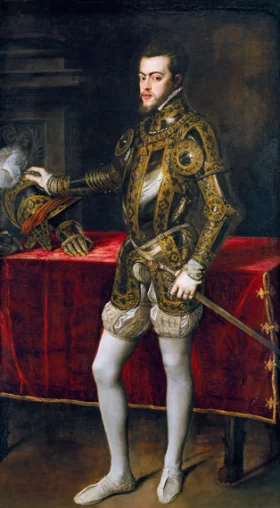
Philip II in Armour 1551
으로 티치안 베첼리오크기 시작 ₩383,369
Portrait of a Gentleman 1561
으로 티치안 베첼리오크기 시작 ₩304,169
Portrait of a Man 1515
으로 티치안 베첼리오크기 시작 ₩312,119
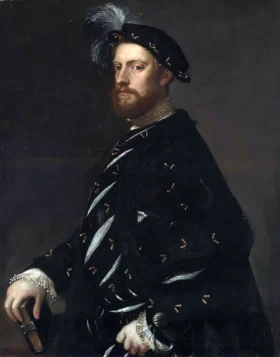
Portrait of a Man Holding a Book 1540
으로 티치안 베첼리오크기 시작 ₩308,139
Portrait of a Man in a Red Cap 1510
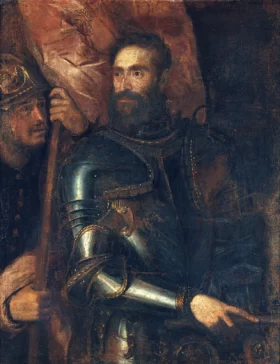
으로 티치안 베첼리오크기 시작 ₩288,259Portrait of Alfonso d’Avalos, Marchese del Vasto, in Armor with a Page 1533
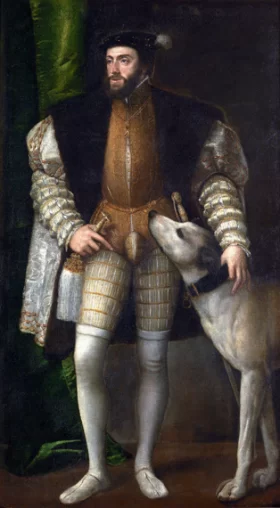
으로 티치안 베첼리오크기 시작 ₩308,139Portrait of Charles V with a Dog
으로 티치안 베첼리오크기 시작 ₩379,419
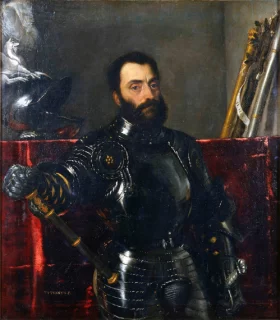
Portrait of Francesco Maria della Rovere, Duke of Urbin
으로 티치안 베첼리오크기 시작 ₩288,259
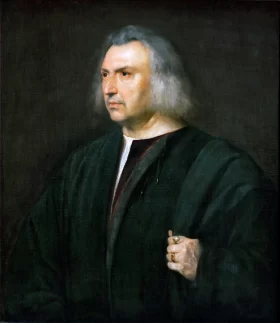
Portrait of Girolamo Fracastoro 1528
으로 티치안 베첼리오크기 시작 ₩288,259
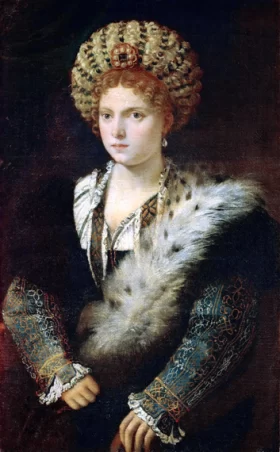
Portrait of Isabella d’Este
으로 티치안 베첼리오크기 시작 ₩355,719
Portrait of the Ambassador Gabriel de Luetz d’Aramont
으로 티치안 베첼리오크기 시작 ₩268,339
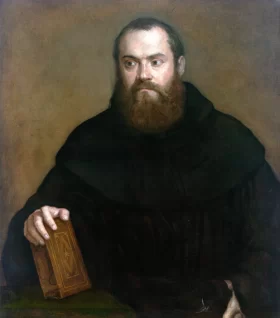
A monk with a book 1550
으로 티치안 베첼리오크기 시작 ₩288,259
Antoine Perrenot de Granvelle 1548
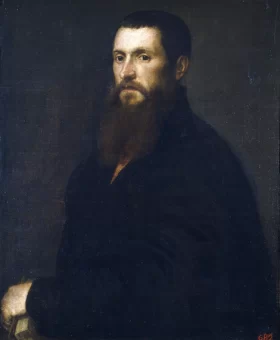
으로 티치안 베첼리오크기 시작 ₩316,089Daniele Barbaro 1545
으로 티치안 베첼리오크기 시작 ₩296,219
Doge Andrea Gritti
으로 티치안 베첼리오크기 시작 ₩308,139
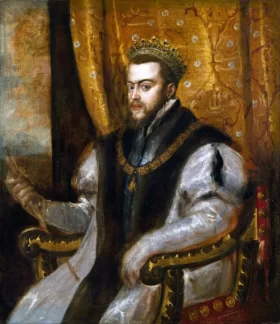
Portrait of Philip II
으로 티치안 베첼리오크기 시작 ₩413,089
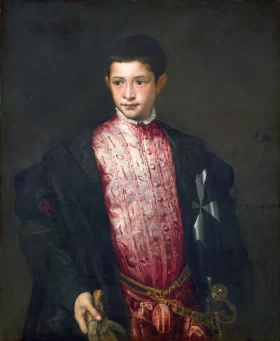
Ranuccio Farnese 1542
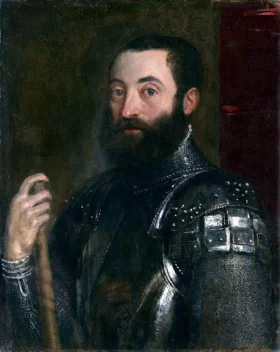
으로 티치안 베첼리오크기 시작 ₩300,189Portrait of Guidobaldo II della Rovere, Duke of Urbino 1545
으로 티치안 베첼리오크기 시작 ₩304,169
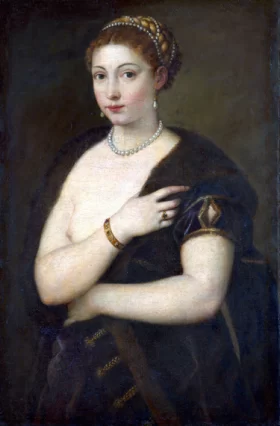
Girl in a Fur
으로 티치안 베첼리오크기 시작 ₩339,879
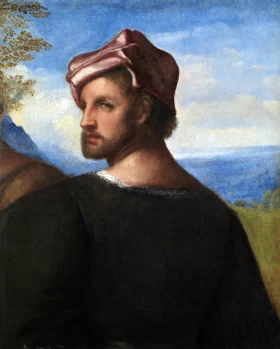
Head of a Man 1509
으로 티치안 베첼리오크기 시작 ₩304,169
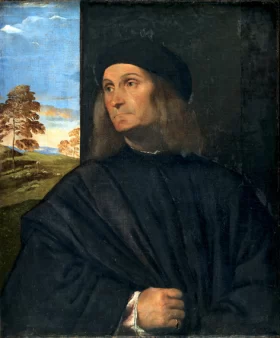
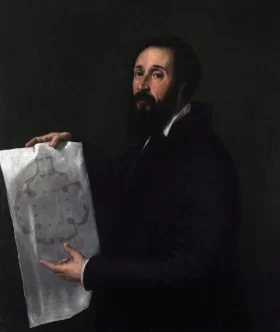
Portrait of the Venetian Painter Giovanni Bellini
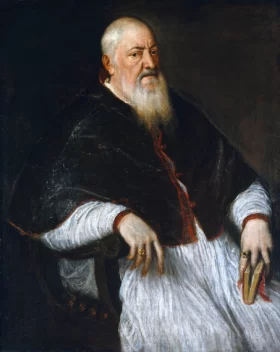
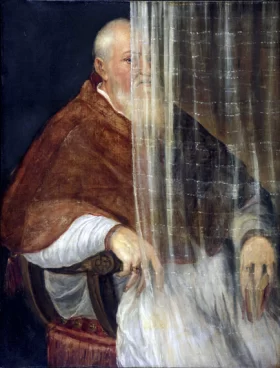
으로 티치안 베첼리오크기 시작 ₩296,219Filippo Archinto, Archbishop of Milan
으로 티치안 베첼리오크기 시작 ₩304,169
Gerard Mercator 1550
으로 티치안 베첼리오크기 시작 ₩292,239
Gian Giacomo Bartolotti da Parma 1518
으로 티치안 베첼리오크기 시작 ₩288,259
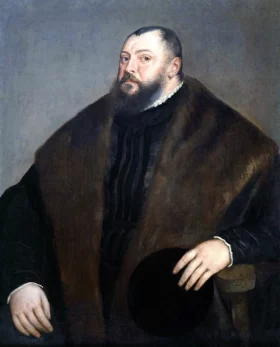
Johann Friedrich 1548
으로 티치안 베첼리오크기 시작 ₩300,189
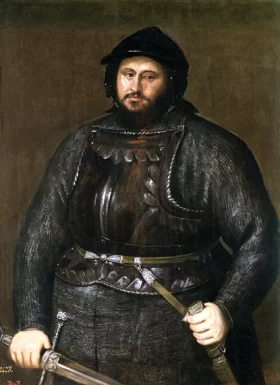
John Frederick I, Elector of Saxony 1548
으로 티치안 베첼리오크기 시작 ₩320,059
Judith with the Head of Holofernes 1570
으로 티치안 베첼리오크기 시작 ₩292,239
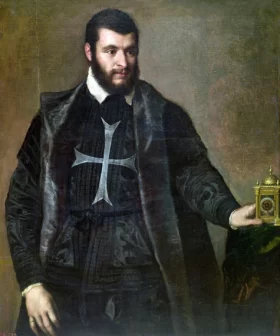
Knight of Malta with a clock 1550
으로 티치안 베첼리오크기 시작 ₩296,219
La Virgen en contemplación
으로 티치안 베첼리오크기 시작 ₩351,759
Man in Armour 1530
으로 티치안 베첼리오크기 시작 ₩284,279
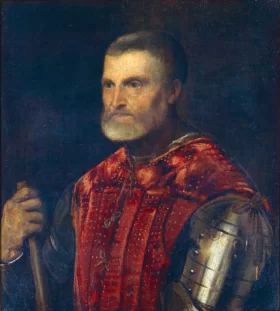
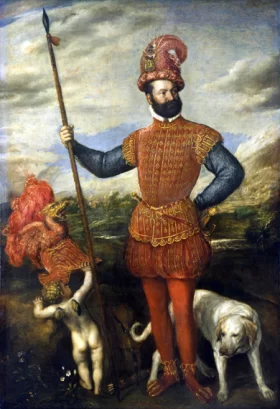
Man in Military Costume
으로 티치안 베첼리오크기 시작 ₩331,949
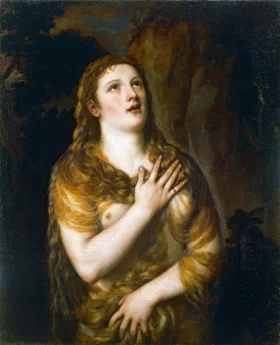
Mary Magdalene 1540
으로 티치안 베첼리오크기 시작 ₩300,189
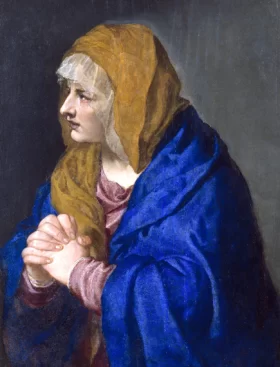
Mater Dolorosa 1554
으로 티치안 베첼리오크기 시작 ₩312,119
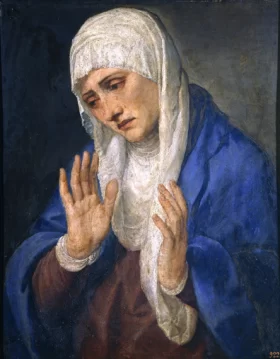
Mater Dolorosa with open hands 1555
으로 티치안 베첼리오크기 시작 ₩308,139
Pietro Aretino 1537
으로 티치안 베첼리오크기 시작 ₩292,239
Portrait of a Friend of Titian (Marco Mantova Benavides)
으로 티치안 베첼리오크기 시작 ₩304,169
Portrait of a Lady 1555
으로 티치안 베첼리오크기 시작 ₩312,119
Portrait of a Man 1515
으로 티치안 베첼리오크기 시작 ₩284,279Portrait of a Young Woman
으로 티치안 베첼리오크기 시작 ₩288,259
Portrait of Pope Paul III with ‘Camauro’
으로 티치안 베첼리오크기 시작 ₩312,119Portrait of Pope Paul III Without Cap 1543
으로 티치안 베첼리오크기 시작 ₩308,139
Cardinal Pietro Bembo 1540
으로 티치안 베첼리오크기 시작 ₩300,189
Portrait of an Unknown Young Cardinal
으로 티치안 베첼리오크기 시작 ₩343,839Portrait of Cardinal Alessandro Farnese
으로 티치안 베첼리오크기 시작 ₩316,089
Portrait of Andrea de’ Franceschi 1550
으로 티치안 베첼리오크기 시작 ₩304,169
Portrait of Cardinal Cristoforo Madruzzo 1552
으로 티치안 베첼리오크기 시작 ₩409,149
Portrait of Cardinal Filippo Archinto 1558
으로 티치안 베첼리오크기 시작 ₩312,119
Portrait of Charles V 1549
으로 티치안 베첼리오크기 시작 ₩327,989
Portrait of Charles V Seated 1548
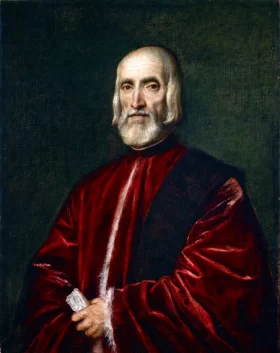
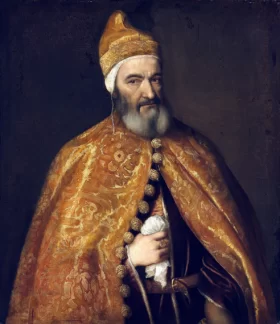
으로 티치안 베첼리오크기 시작 ₩363,619Portrait of Marcantonio Trevisan, Doge of Venice
으로 티치안 베첼리오크기 시작 ₩292,239Portrait of Pier Luigi Farnese 1546
으로 티치안 베첼리오크기 시작 ₩312,119
Portrait of Pietro Aretino 1545
으로 티치안 베첼리오크기 시작 ₩308,139
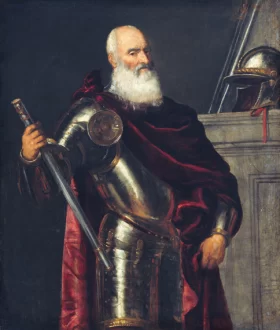
Portrait of Vincenzo Cappello 1540
으로 티치안 베첼리오크기 시작 ₩292,239Posible retrato de Jan van Haanen
으로 티치안 베첼리오크기 시작 ₩312,119Ritratto di Giulio Romano
으로 티치안 베첼리오크기 시작 ₩292,239
Saint Agnes
으로 티치안 베첼리오크기 시작 ₩280,299
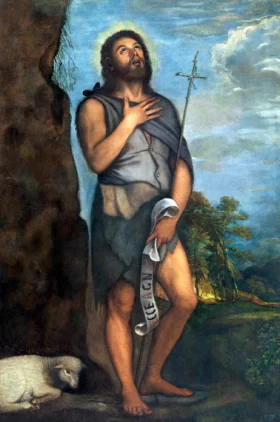
Saint John the Baptist
으로 티치안 베첼리오크기 시작 ₩339,879
Santa Catalina de Alejandría 1560
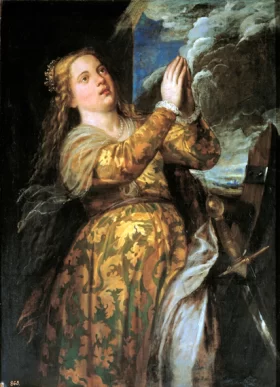
으로 티치안 베첼리오크기 시작 ₩320,059Santa Margarita 1574
으로 티치안 베첼리오크기 시작 ₩304,169
Self-portrait 1562
으로 티치안 베첼리오크기 시작 ₩320,059
Self-Portrait
으로 티치안 베첼리오크기 시작 ₩316,089
St Sebastian
으로 티치안 베첼리오크기 시작 ₩387,319
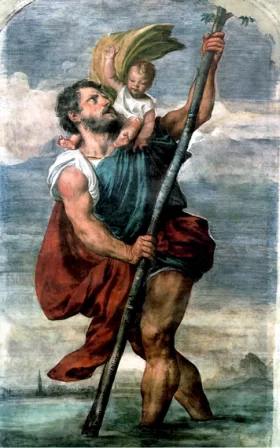
St. Christopher
으로 티치안 베첼리오크기 시작 ₩385,949
The Miracle of the Newborn Child 1511
으로 티치안 베첼리오크기 시작 ₩309,729
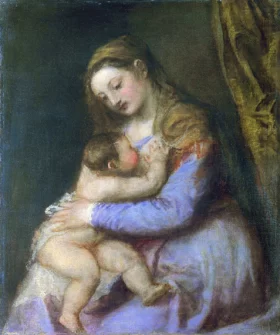
The Virgin suckling the Infant Christ
으로 티치안 베첼리오크기 시작 ₩345,859Adoration of the Christ Child 1506
으로 티치안 베첼리오크기 시작 ₩351,009
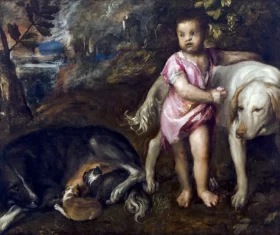
Boy with Dogs in a Landscape
으로 티치안 베첼리오크기 시작 ₩345,859
Sleeping Shepherd
으로 티치안 베첼리오크기 시작 ₩1,002,899
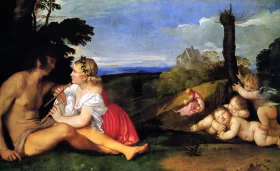
The Three Ages of Man 1512
으로 티치안 베첼리오크기 시작 ₩436,639