5% rabatt bruk koden KMNO5 ved kassen
- Choose your Country

5% rabatt bruk koden KMNO5 ved kassen
Romanticism
Romanticism is a complex artistic, literary, and intellectual movement that originated in the second half of the 18th century in Western Europe, and gained strength during the Industrial Revolution. It was partly a revolt against aristocratic social and political norms of the Age of Enlightenment and a reaction against the scientific rationalization of nature, and was embodied most strongly in the visual arts, music, and literature.
The movement stressed strong emotion as a source of aesthetic experience, placing new emphasis on such emotions as trepidation, horror and awe-especially that which is experienced in confronting the sublimity of untamed nature and its picturesque qualities, both new aesthetic categories. It elevated folk art and custom to something noble, and argued for a «natural» epistemology of human activities as conditioned by nature in the form of language, custom and usage.
Our modern sense of a romantic character is sometimes based on Byronic or Romantic ideals. Romanticism reached beyond the rational and Classicist ideal models to elevate medievalism and elements of art and narrative perceived to be authentically medieval, in an attempt to escape the confines of population growth, urban sprawl and industrialism, and it also attempted to embrace the exotic, unfamiliar and distant in modes more authentic than chinoiserie, harnessing the power of the imagination to envision and to escape.
Although the movement is rooted in German Pietism, which prized intuition and emotion over Enlightenment rationalism, the ideologies and events of the French Revolution laid the background from which Romanticism emerged. The confines of the Industrial Revolution also had their influence on Romanticism, which was in part an escape from modern realities, indeed, in the second half of the 19th century, «Realism» was offered as a polarized opposite to Romanticism. Romanticism elevated the achievements of what it perceived as misunderstood heroic individuals and artists that altered society. It also legitimized the individual imagination as a critical authority which permitted freedom from Classical notions of form in art. There was a strong recourse to historical and natural inevitability, a zeitgeist, in the representation of its ideas.
In a basic sense, the term «Romanticism» has been used to refer to certain artists, poets, writers, musicians, as well as political, philosophical and social thinkers of the late 18th and early to mid 19th centuries. It has equally been used to refer to various artistic, intellectual, and social trends of that era. Despite this general usage of the term, a precise characterization and specific definition of Romanticism have been the subject of debate in the fields of intellectual history and literary history throughout the twentieth century, without any great measure of consensus emerging. Arthur Lovejoy attempted to demonstrate the difficulty of this problem in his seminal article «On The Discrimination of Romanticisms» in his Essays in the History of Ideas (1948), some scholars see romanticism as essentially continuous with the present, some see in it the inaugural moment of modernity, some see it as the beginning of a tradition of resistance to the Enlightenment-a Counter-Enlightenment-and still others place it firmly in the direct aftermath of the French Revolution. An earlier definition comes from Charles Baudelaire: «Romanticism is precisely situated neither in choice of subject nor exact truth, but in the way of feeling.»
Many intellectual historians have seen Romanticism as a key movement in the Counter-Enlightenment, a reaction against the Age of Enlightenment. Whereas the thinkers of the Enlightenment emphasized the primacy of deductive reason, Romanticism emphasized intuition, imagination, and feeling, to a point that has led to some Romantic thinkers being accused of irrationalism.
In visual art and literature, Romanticism found recurrent themes in the evocation or criticism of the past, the cult of «sensibility» with its emphasis on women and children, the heroic isolation of the artist or narrator, and respect for a new, wilder, untrammeled and «pure» nature. Furthermore, several romantic authors, such as Edgar Allan Poe and Nathaniel Hawthorne, based their writings on the supernatural/occult and human psychology.
The Scottish poet James Macpherson influenced the early development of Romanticism with the international success of his Ossian cycle of poems published in 1762, inspiring both Goethe and the young Walter Scott.
An early German influence came from Johann Wolfgang Goethe whose 1774 novel The Sorrows of Young Werther had young men throughout Europe emulating its protagonist, a young artist with a very sensitive and passionate temperament. At that time Germany was a multitude of small separate states, and Goethe’s works would have a seminal influence in developing a unifying sense of nationalism. Another philosophic influence came from the German idealism of Johann Gottlieb Fichte and Friedrich Schelling, making Jena (where Fichte lived, as well as Schelling,Hegel, Schiller and the brothers Schlegel) a center for early German romanticism («Jenaer Romantik»). Important writers were Ludwig Tieck, Novalis (Heinrich von Ofterdingen, 1799), Heinrich von Kleist and Friedrich Hoelderlin. Heidelberg later became a center of German romanticism, where writers and poets such as Clemens Brentano, Achim von Arnim, and Joseph Freiherr von Eichendorff met regularly in literary circles. Important motifs in German Romanticism are travelling, nature, and ancient myths. The later German Romanticism of, for example, E. T. A. Hoffmann’s Der Sandmann (The Sandman), 1817, and Joseph Freiherr von Eichendorff’s Das Marmorbild (The Marble Statue), 1819, was darker in its motifs and has gothic elements.
In predominantly Roman Catholic countries Romanticism was less pronounced than in Germany and Britain, and tended to develop later, after the rise of Napoleon. Francois-Rene de Chateaubriand is often called the «Father of French Romanticism». In France, the movement is associated with the nineteenth century, particularly in the paintings of Theodore Gericault and Eugene Delacroix, the plays, poems and novels of Victor Hugo (such as Les Miserables and Ninety-Three), and the novels of Stendhal.
In Russia, the principal exponent of Romanticism is Alexander Pushkin. Mikhail Lermontov attempted to analyse and bring to light the deepest reasons for the Romantic idea of metaphysical discontent with society and self, and was much influenced by Lord Byron. The poet Fyodor Tyutchev was also an important figure of the movement in Russia, and was heavily influenced by the German Romantics.
In the United States, romantic gothic literature made an early appearance with Washington Irving’s The Legend of Sleepy Hollow (1820) and Rip Van Winkle (1819), followed from 1823 onwards by the Leatherstocking Tales of James Fenimore Cooper, with their emphasis on heroic simplicity and their fervent landscape descriptions of an already-exotic mythicized frontier peopled by «noble savages», similar to the philosophical theory of Rousseau, exemplified by Uncas, from The Last of the Mohicans. There are picturesque «local color» elements in Washington Irving’s essays and especially his travel books. Edgar Allan Poe’s tales of the macabre and his balladic poetry were more influential in France than at home, but the romantic American novel developed fully in Nathaniel Hawthorne’s atmosphere and melodrama. Later Transcendentalist writers such as Henry David Thoreau and Ralph Waldo Emerson still show elements of its influence and imagination, as does the romantic Realism of Walt Whitman.
But by the 1880s, psychological and social Realism was competing with romanticism in the novel. The poetry of Emily Dickinson-nearly unread in her own time-and Herman Melville’s novel Moby-Dick can be taken as epitomes of American Romantic literature. As in England, Germany, and France, literary Romanticism had its counterpart in American visual arts, most especially in the exaltation of untamed America found in the paintings of the Hudson River School. Painters like Thomas Cole, Albert Bierstadt and Frederic Edwin Church and others often combined a sense of the sublime with underlying religious and philosophical themes. Thomas Cole’s paintings feature strong narratives as in The Voyage of Life series painted in the early 1840s that depict man trying to survive amidst an awesome and immense nature, from the cradle to the grave.
Read moreViser 1001–1100 av 1752 resultater

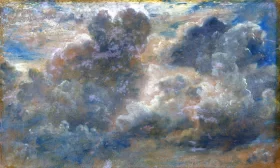
Cloud Study 1822
By John ConstableSizes starting at kr3.109
Mercury Sent to Admonish Aeneas
By J.M.W. TurnerSizes starting at kr2.879
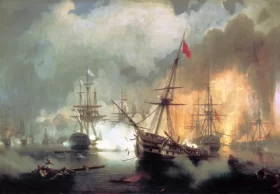
Sea battle at Navarino on October 20 1827, 1846
By Ivan AivazovskySizes starting at kr3.519
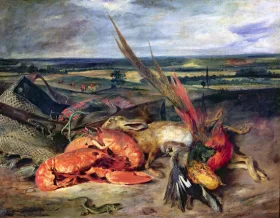
Still Life With Lobsters
By Eugene DelacroixSizes starting at kr2.779
Coastal Scene with Cliffs 1814
By John ConstableSizes starting at kr3.419
Mont Blanc from the Bridge of St. Martin, Sallanches
By J.M.W. TurnerSizes starting at kr2.969
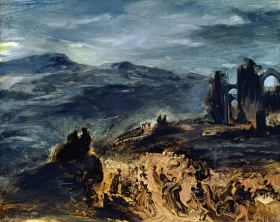
Sabbath Scene 1831
By Eugene DelacroixSizes starting at kr2.749
Sea coast 1886
By Ivan AivazovskySizes starting at kr3.519
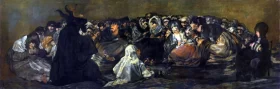
The Great He-Goat
By Francisco GoyaSizes starting at kr6.619
A Pilgrimage to San Isidro
By Francisco GoyaSizes starting at kr6.529
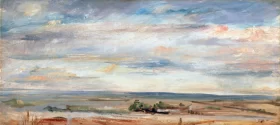
Cloud Study, Early Morning, Looking East from Hampstead 1821
By John ConstableSizes starting at kr3.679
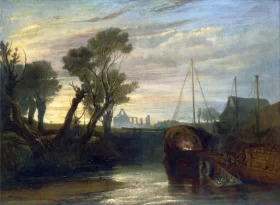
Newark – upon – Trent 1796
By J.M.W. TurnerSizes starting at kr2.939Odalisque
By Eugene DelacroixSizes starting at kr2.879
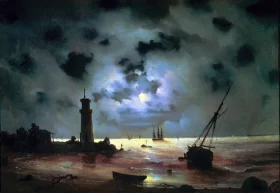
Sea coast at night. Near the beacon 1837
By Ivan AivazovskySizes starting at kr3.519
Newark Abbey
By J.M.W. TurnerSizes starting at kr2.909
Ocean 1896
By Ivan AivazovskySizes starting at kr3.559
Pilgrimage to the Fountain of San Isidro
By Francisco GoyaSizes starting at kr5.009
Stonehenge
By John ConstableSizes starting at kr2.999
Tasso
By Eugene DelacroixSizes starting at kr2.659
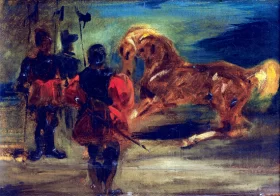
A Horse and Three Men in Arms
By Eugene DelacroixSizes starting at kr3.149
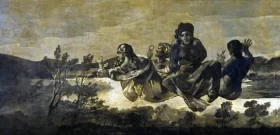
Atropos or The Fates
By Francisco GoyaSizes starting at kr3.939
Cottages at East Bergholt, Suffolk
By John ConstableSizes starting at kr2.969
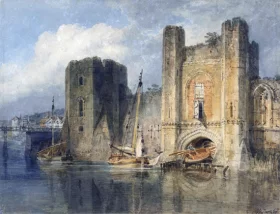
Newport Castle 1796
By J.M.W. TurnerSizes starting at kr2.849Sea Shore
By Ivan AivazovskySizes starting at kr3.519
Dedham from near Gun Hill, Langham 1815
By John ConstableSizes starting at kr2.659
Fantastic Vision (Asmodea)
By Francisco GoyaSizes starting at kr4.669
Oberwesel, 1840
By J.M.W. TurnerSizes starting at kr3.099
Seacape with Full Moon
By Ivan AivazovskySizes starting at kr3.599
Fight with Cudgels
By Francisco GoyaSizes starting at kr4.069
Mount Sinai, the Valley in which the Children of Israel were encamped
By J.M.W. TurnerSizes starting at kr3.159
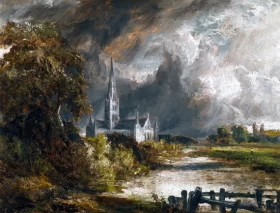
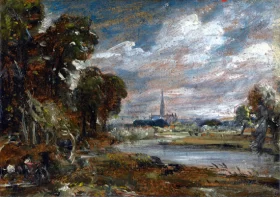
Salisbury Cathedral from the Bishop’s Garden
By John ConstableSizes starting at kr2.719Seascape 1885
By Ivan AivazovskySizes starting at kr3.679Palace of La Belle Gabrielle 1830
By J.M.W. TurnerSizes starting at kr2.849
Salisbury Cathedral from the Close
By John ConstableSizes starting at kr2.689Seascape with Boat, 1892
By Ivan AivazovskySizes starting at kr3.909
Two old men eating
By Francisco GoyaSizes starting at kr3.489
Man Mocked by Two Women
By Francisco GoyaSizes starting at kr3.769
Raby Castle, the Seat of the Earl of Darlington 1817
By J.M.W. TurnerSizes starting at kr3.069
Revel 1844
By Ivan AivazovskySizes starting at kr3.759Salisbury Cathedral from the south-west
By John ConstableSizes starting at kr2.659Moonlight, a Study at Millbank
By J.M.W. TurnerSizes starting at kr2.719Sailing along the shore
By Ivan AivazovskySizes starting at kr3.819
Salisbury Cathedral from the Meadows
By John ConstableSizes starting at kr2.809
The reading
By Francisco GoyaSizes starting at kr3.769
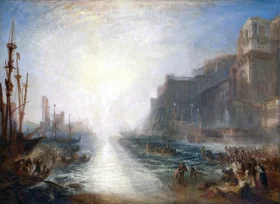
Regulus
By J.M.W. TurnerSizes starting at kr2.909
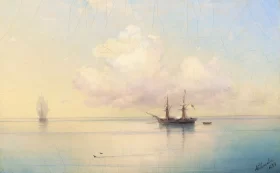
Sailing Ships on a Calm Day 1887
By Ivan AivazovskySizes starting at kr3.759
Sir Richard Steele’s Cottage, Hampstead
By John ConstableSizes starting at kr2.829
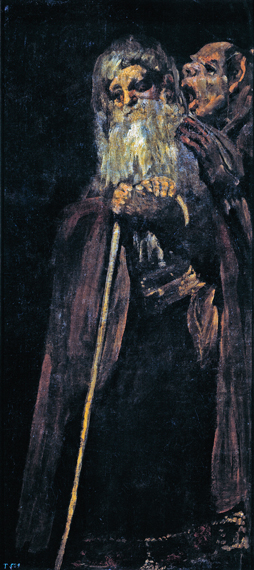
Two Old Men
By Francisco GoyaSizes starting at kr4.109
Judith and Holofernes
By Francisco GoyaSizes starting at kr3.629Rievaulx Abbey, Yorkshire
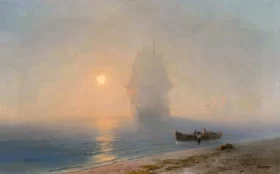
By J.M.W. TurnerSizes starting at kr2.999Sailing through the Haze
By Ivan AivazovskySizes starting at kr3.759
Salisbury Cathedral from the River Nadder 1829
By John ConstableSizes starting at kr2.859Dedham Lock
By John ConstableSizes starting at kr2.829
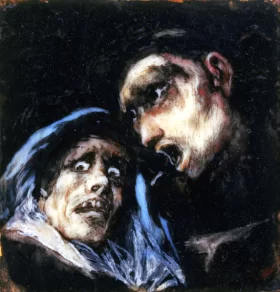
Monk Talking to an Old Woman
By Francisco GoyaSizes starting at kr2.669
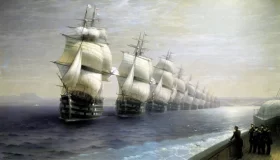
Review of the Black Sea Fleet in 1849
By Ivan AivazovskySizes starting at kr3.959
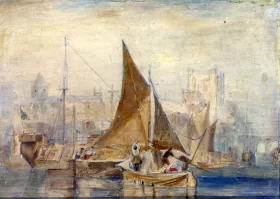
Rochester on the Medway
By J.M.W. TurnerSizes starting at kr3.019
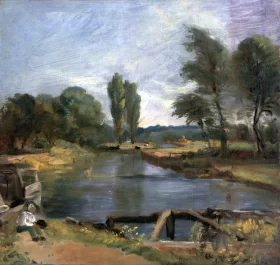
Flatford Lock
By John ConstableSizes starting at kr2.549
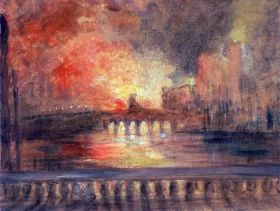
The Burning of the Houses of Parliament 1834
By J.M.W. TurnerSizes starting at kr2.769
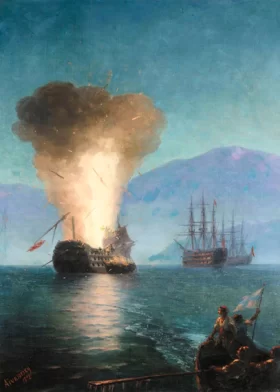
The Firing of the Turkish Fleet by Kanaris in 1822
By Ivan AivazovskySizes starting at kr3.439
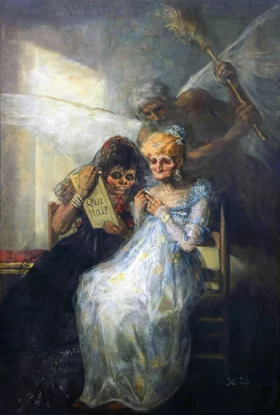
Time and the old woman 1810
By Francisco GoyaSizes starting at kr3.559
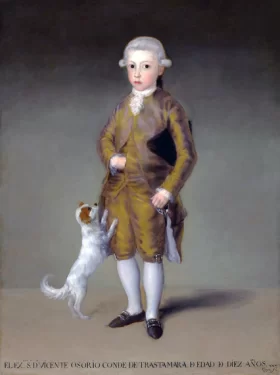
Don Vicente Isabel Osorio de Moscoso y Álvarez de Toledo, Conde de Trastámara
By Francisco GoyaSizes starting at kr3.049
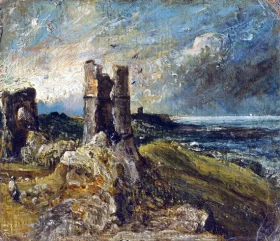
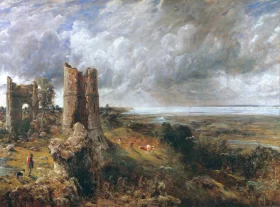
Hadleigh Castle
By John ConstableSizes starting at kr2.599
Stormy sea at night 1849
By Ivan AivazovskySizes starting at kr3.189
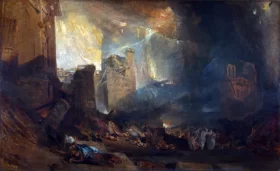
The Destruction of Sodom
By J.M.W. TurnerSizes starting at kr3.269Hampstead Heath Looking Towards Harrow 1821
By John ConstableSizes starting at kr2.659
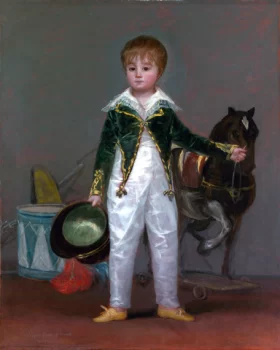
José Costa y Bonells, Called Pepito 1810
By Francisco GoyaSizes starting at kr2.789
The Evening Star 1830
By J.M.W. TurnerSizes starting at kr2.839
The shipwreck 1
By Ivan AivazovskySizes starting at kr3.269
Hadleigh Castle, The Mouth of the Thames-Morning after a Stormy Night 1829
By John ConstableSizes starting at kr2.799
Manuel Osorio Manrique de Zuñiga
By Francisco GoyaSizes starting at kr2.909
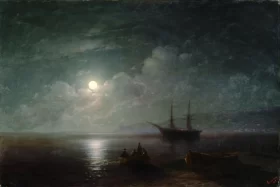
Ship by Moonlight 1
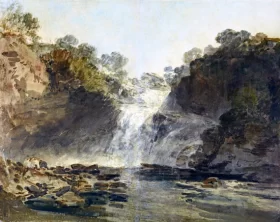
By Ivan AivazovskySizes starting at kr3.639The Falls of Clyde 1801
By J.M.W. TurnerSizes starting at kr2.859Landscape Study – Scene in a Park 1823
By John ConstableSizes starting at kr2.659
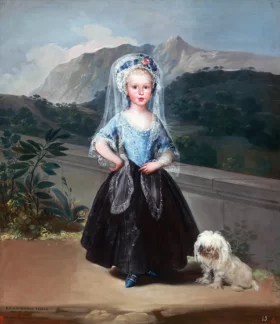
María Teresa de Borbón y Vallabriga, later Condesa de Chinchón, 1783
By Francisco GoyaSizes starting at kr2.669Shipping off the Dutch coast
By Ivan AivazovskySizes starting at kr3.599
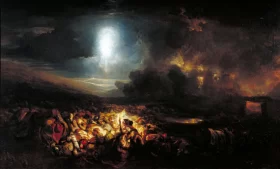
The Field of Waterloo
By J.M.W. TurnerSizes starting at kr3.219
Landscape with a Double Rainbow 1812
By John ConstableSizes starting at kr2.689
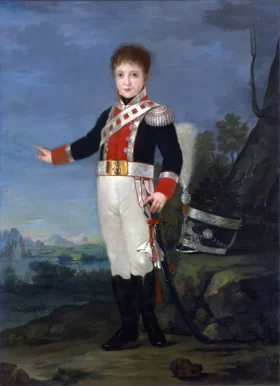
Portrait of Don Sebastien Marie Gabriel de Bourbon-Bragance 1822
By Francisco GoyaSizes starting at kr2.909
Ship off the Crimean Coast 1881
By Ivan AivazovskySizes starting at kr4.039
The Junction of the Lahn and the Rhine, Germany
By J.M.W. TurnerSizes starting at kr3.029
On the River Stour
By John ConstableSizes starting at kr2.779
Portrait of Luis María de Borbón y Vallabriga 1783
By Francisco GoyaSizes starting at kr2.729Shipwreck on a Stormy Morning, 1895
By Ivan AivazovskySizes starting at kr3.799The Temple of Jupiter Panellenius Restored
By J.M.W. TurnerSizes starting at kr3.099
Dedham Vale 1802
By John ConstableSizes starting at kr2.689
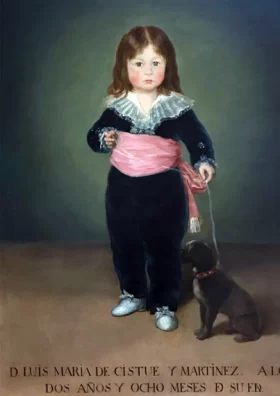
Portrait of Luis María de Cistué Martínez 1791
By Francisco GoyaSizes starting at kr2.939Storm Signal 1851
By Ivan AivazovskySizes starting at kr3.519
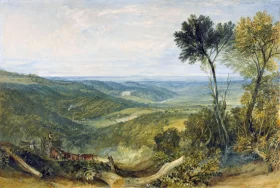
The Vale of Ashburnham 1816
By J.M.W. TurnerSizes starting at kr3.109
Flailing Turnip-Heads, East Bergholt
By John ConstableSizes starting at kr2.689Stormy waters near Biarritz
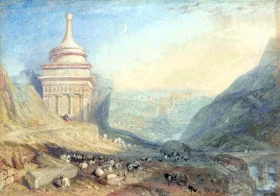
By Ivan AivazovskySizes starting at kr3.659The Valley of the Brook at Kidron, Jerusalem (Absalom’s Tomb)
By J.M.W. TurnerSizes starting at kr2.969
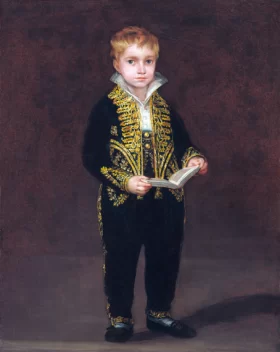
Victor Guye, 1810
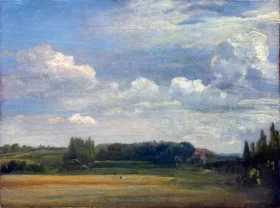
By Francisco GoyaSizes starting at kr2.789East Bergholt Common, View Toward the Rectory 1813
By John ConstableSizes starting at kr2.839
Portrait of marquise de Montehermoso 1810
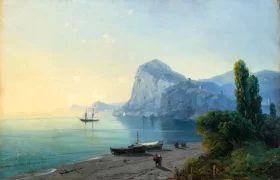
By Francisco GoyaSizes starting at kr3.219Sudak. Fortress 1893
By Ivan AivazovskySizes starting at kr3.679
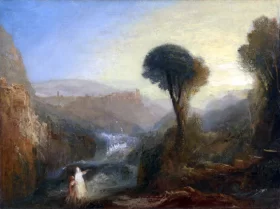
Tivoli- Tobias and the Angel 1835
By J.M.W. TurnerSizes starting at kr2.769
Charles IV on horseback 1800
By Francisco GoyaSizes starting at kr2.729English Landscape
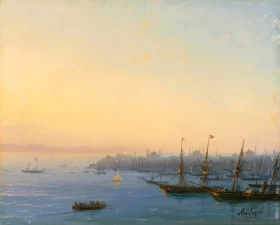
By John ConstableSizes starting at kr2.769Sunset over Constantinople
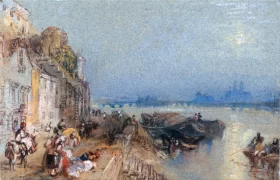
By Ivan AivazovskySizes starting at kr3.229Tours- Sunset- Looking Backwards
By J.M.W. TurnerSizes starting at kr3.129